Where there's space - there's possibility

Leave Your Message
0%

So if you're buying cement in 2026, here's the reality: the Cement Materials market is being pulled in a few directions at once—scale, carbon pressure, and supply that just isn't even across regions. The U.S. Geological Survey put global cement production at about 4.1 billion metric tons in 2024. China, India, Vietnam, Türkiye, and the U.S. were still the big producers. But—and this is important—volume alone doesn't tell you much about purchasing quality.

The details are where things get real.

The International Energy Agency estimates cement is responsible for roughly 7% of global energy-related and process CO2 emissions. Their work keeps pointing to clinker reduction, alternative fuels, waste heat recovery, and carbon capture. The Global Cement and Concrete Association also says low-carbon cement and transparent environmental data are must-haves for the sector to change. And this isn't just a sustainability-team issue. It touches landed cost, future carbon reporting, project approvals, and how you choose suppliers.

This guide looks at Portland cement, blended cement, rapid-hardening cement, white cement, sulfate-resistant cement, and other practical options. It weighs strength development, setting time, durability, standards, packaging, and transport conditions. That 50-kilogram bag might look like a bargain at the factory gate, but moisture damage can wipe out the savings before it ever gets installed. Bulk shipments need different controls. Testing certificates matter.

And buyer experience? It still shows some uncomfortable gaps.

Some suppliers make impressive emissions claims without really explaining system boundaries or verification. A lower-clinker product can perform well, yet local codes and contractor familiarity might keep it from catching on. No shortlist is perfect. Before signing contracts, buyers should check mill test reports, conformity documents, production dates, and independent lab results. This 2026 overview leans on recognized industry research to help with practical decisions—while keeping in mind that prices, regulations, and availability can shift fast.
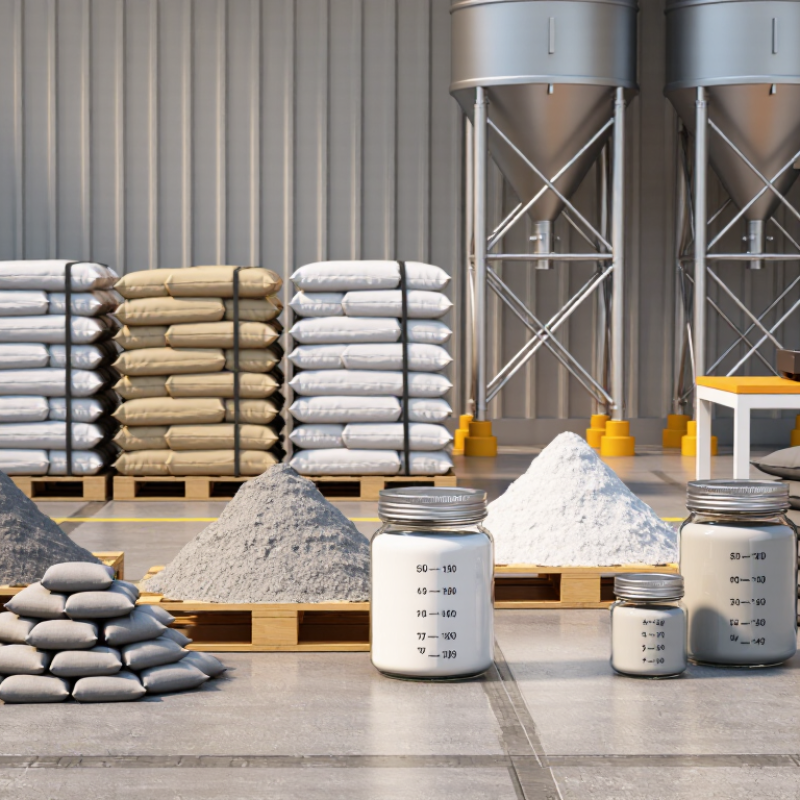
2026 Top Cement Materials Types for Global Buyers?

Cement Materials: Definition, Role, and Core Composition

Cement materials are mineral inputs processed into a hydraulic binder. The main product is clinker, formed by heating limestone and clay in a rotary kiln. Clinker contains calcium silicates, aluminates, and ferrites. Gypsum is then added to control setting time. Other materials may include limestone, slag, fly ash, and natural pozzolans.

The U.S. Geological Survey estimated global cement production at about 4.1 billion metric tons in 2024. This scale makes material consistency a serious purchasing issue. The International Energy Agency reports that cement production causes roughly 7% of global energy-related and process CO2 emissions. Buyers should examine more than price. Chemical stability, moisture content, fineness, compressive strength, and transport conditions directly affect performance. A low-cost shipment can become expensive when it causes unstable setting or extra grinding. That happens.

Tips: Request a recent laboratory certificate for every major material. Check calcium oxide, silica, alumina, magnesia, sulfur, chloride, and loss on ignition. Compare test methods before comparing numbers. Samples should represent the full shipment, not only the surface layer. Storage also matters. Wet gypsum or contaminated mineral additions can quietly change cement quality. ASTM and EN testing frameworks provide useful references, but local requirements may differ. One weakness remains: published averages cannot predict every quarry or kiln. Experienced buyers should combine report data, factory audits, trial batches, and independent testing before approving a 2026 supply source.

Main Cement Types Used in Global Construction

Main Cement Types Used in Global Construction

Global construction projects use cement according to strength, setting time, exposure, and finish requirements. Ordinary Portland Cement remains common for foundations, columns, roads, and general concrete work. Rapid-hardening cement helps when early strength matters, such as repairs or tight construction schedules. Low-heat cement suits large foundations, dams, and thick retaining walls because it reduces temperature cracking. Sulfate-resistant cement is useful in coastal soil, wastewater structures, and areas with aggressive groundwater. White cement supports decorative walls, terrazzo, and architectural details.

Blended Cement Materials combine clinker with carefully selected additions, such as limestone, slag, or pozzolanic materials. These blends can reduce heat generation and improve durability over time. However, performance depends on the formulation, curing conditions, and local standards. A mixture that performs well in a humid port may need adjustment in a dry inland region. On project reviews, buyers often focus on price first. That can be a costly mistake. Cement freshness, storage, and test certificates also affect real results. No selection is perfect.

Tips: Match cement to the exposure environment, not only the advertised strength. Check setting time, fineness, sulfate performance, and compatibility with local aggregates. Store bags on raised pallets in a dry, covered room. Confirm conformity through independent laboratory testing when specifications are critical. Small site trials can reveal unexpected workability problems before full-scale placement.

2026 Top Cement Materials Types for Global Buyers? - Main Cement Types Used in Global Construction

Cement Type Main Constituents Common Standard Classification Primary Performance Characteristics Typical Construction Applications Key Purchasing Considerations
Ordinary Portland Cement Portland cement clinker with a controlled quantity of calcium sulfate, usually gypsum, to regulate setting. ASTM C150 Type I
EN 197-1 CEM I
General-purpose strength development, reliable setting, and broad compatibility with concrete admixtures. Buildings, foundations, pavements, bridges, precast concrete, and general reinforced-concrete work. Confirm the applicable national standard, strength class, setting time, fineness, storage condition, and test certificate.
Portland Limestone Cement Portland clinker, gypsum, and finely ground limestone used as a supplementary main constituent. ASTM C595 Type IL
EN 197-1 CEM II/A-L or CEM II/B-L
Similar general-purpose performance to Portland cement, with reduced clinker content and potentially lower embodied carbon. Ready-mix concrete, commercial buildings, residential construction, slabs, roads, and concrete products. Check limestone content, early-age strength requirements, applicable exposure class, and compatibility with the mix design.
Portland Pozzolan Cement Portland clinker combined with natural pozzolan, calcined clay, fly ash, or another reactive siliceous or siliceous-aluminous material. ASTM C595 Type IP
EN 197-1 CEM II/A-P or CEM II/B-P
Lower permeability and improved long-term durability are common; early strength may develop more slowly depending on formulation and temperature. Mass concrete, marine structures, water-retaining structures, foundations, and general infrastructure. Evaluate pozzolan source, early-strength needs, curing conditions, chloride resistance, and regional availability.
Slag-Blended Cement Portland clinker, gypsum, and granulated blast-furnace slag, also known as ground granulated blast-furnace slag when separately ground. ASTM C595 Type IS
EN 197-1 CEM III
Often provides lower heat evolution, reduced permeability, and enhanced resistance to chloride ingress and some sulfate environments. Marine works, ports, wastewater facilities, mass concrete, foundations, tunnels, and large infrastructure projects. Check slag replacement level, curing temperature, early-age strength, supply consistency, and project exposure requirements.
Composite Cement A combination of Portland clinker with two or more supplementary cementitious materials, such as slag, fly ash, natural pozzolan, or limestone. EN 197-1 CEM V
Regional blended-cement standards
Can balance workability, durability, heat control, and reduced clinker content, depending on the blend proportions. Large infrastructure, general building concrete, precast products, foundations, and projects seeking lower embodied carbon. Request the full constituent declaration, strength development data, durability evidence, and performance under local climatic conditions.
Rapid-Hardening Cement Portland cement manufactured or selected to achieve high early strength, commonly through finer grinding and controlled clinker composition. ASTM C150 Type III
EN 197-1 rapid-strength classes
Faster early-age strength gain than ordinary general-purpose cement; may generate more heat during hydration. Precast concrete, road repairs, bridge repairs, cold-weather construction, and projects requiring early formwork removal. Review early-strength test ages, heat generation, setting time, curing procedure, and risk of thermal cracking.
Low-Heat Cement Cement formulated with a lower heat-of-hydration profile, often using a suitable clinker composition or supplementary cementitious materials. ASTM C150 Type IV
EN 197-1 low-heat specifications
Slower heat release helps reduce temperature rise and thermal stress in large concrete placements. Dams, thick foundations, massive retaining structures, large raft slabs, and other mass-concrete applications. Confirm heat-of-hydration data, placement size, ambient temperature, curing plan, and required strength-development schedule.
Sulfate-Resisting Cement Portland cement with controlled clinker chemistry, particularly reduced tricalcium aluminate content, or a blended cement with sulfate-resistant performance. ASTM C150 Type V
EN 197-1 sulfate-resisting options
Improved resistance to certain sulfate-bearing soils and groundwater when used with suitable concrete design and curing. Foundations in sulfate soils, sewage works, drainage structures, marine environments, and underground construction. Obtain a site-specific sulfate assessment; verify cement qualification, water-cement ratio, permeability, and exposure-class requirements.
White Cement Portland cement made from raw materials with very low levels of iron and other coloring oxides. ASTM C150 white cement
EN 197-1 white CEM I
Produces a light-colored matrix and allows bright, consistent finishes when suitable aggregates and pigments are used. Architectural concrete, terrazzo, decorative precast products, tile grout, renders, and colored cement-based finishes. Check color consistency, whiteness, fineness, strength class, packaging protection, and compatibility with pigments or aggregates.
Masonry Cement Hydraulic cement blended and formulated for mortar workability, water retention, and controlled air content; it is not normally intended for structural concrete. ASTM C91
Regional masonry-cement standards
Good plasticity and workability for laying units and rendering, with performance tailored to mortar rather than structural concrete. Brickwork, blockwork, stone masonry, plastering, rendering, and general mortar applications. Confirm mortar designation, compressive-strength range, air content, water retention, bag labeling, and local masonry-code requirements.
Oil-Well Cement Specially controlled hydraulic cement designed for cementing casing in oil and gas wells under elevated temperature and pressure. API Specification 10A
ISO 10426-1
Controlled thickening time and slurry properties for placement at specific well depths, temperatures, and pressure conditions. Primary and remedial well cementing, casing support, zonal isolation, and well-completion operations. Specify well depth, bottom-hole circulating temperature, pressure, slurry density, additives, thickening time, and laboratory qualification.
Classification references include commonly used ASTM, EN, API, and ISO standards. Final cement selection should be verified against the project specification, local regulations, environmental exposure, mix design, and the supplier’s current test data.

Key Raw Materials and Their Manufacturing Functions

Cement Building Materials begin with carefully selected raw materials. Limestone supplies calcium oxide, the main ingredient for clinker formation. Clay contributes silica, alumina, and smaller amounts of iron. These minerals must be proportioned accurately. Small chemical changes can affect setting time, strength, and kiln performance.

Iron-bearing corrective materials adjust the raw mix when natural deposits lack sufficient iron. Their function seems minor, but they support clinker mineral formation and improve burnability. The mixture is ground into a fine powder before entering the preheater and rotary kiln. Heat removes moisture and carbon dioxide, then creates hard clinker nodules. This stage demands stable temperature control. Uneven heating can produce weak or over-burned clinker.

Gypsum is added during final grinding to regulate cement setting. Without it, the cement may stiffen too quickly during placement. Many producers also use supplementary cementitious materials, such as calcined clay, slag, or natural pozzolans. These materials can reduce clinker demand and improve selected durability properties. Their performance depends on fineness, chemistry, moisture, and compatibility with the cement system. Quality teams should test each shipment rather than trust supplier averages. That sounds obvious, yet it is sometimes overlooked. Storage matters too. Wet materials can harden, contaminate mills, and create inconsistent batches. Careful sampling, laboratory analysis, and process records help global buyers compare reliable Cement Building Materials beyond price alone.

2026 Top Cement Material Types for Global Buyers

Key Raw Materials and Their Manufacturing Functions

The chart shows indicative inclusion ranges for major cement materials used in common Portland, blended, and composite cement formulations. Clinker provides the main hydraulic strength, gypsum controls setting time, limestone acts as a calcareous raw material and mineral addition, while slag, fly ash, natural pozzolan, and calcined clay reduce clinker demand and can improve durability or sustainability performance.

Ranges are representative rather than a single recipe. Actual limits vary by cement type, national standards, declared performance, and local raw-material quality. Reference framework: EN 197-1 cement composition categories and ASTM cement and pozzolan classifications.

Performance Differences Across Cement Material Types

2026 Top Cement Materials Types for Global Buyers

Performance Differences Across Cement Material Types

For global buyers in 2026, cement selection should begin with performance, not price. Different cement material types react differently to moisture, heat, loading, and curing conditions. Ordinary Portland cement offers dependable early strength and broad availability. It suits general foundations, slabs, and precast work. However, it can release considerable heat in thick pours. That detail matters.

Blended cement, containing slag, fly ash, or calcined clay, often develops strength more slowly. Its later-age strength and lower permeability can improve durability in marine or wet environments. Sulfate-resistant cement performs better where soil or groundwater contains aggressive sulfates. Low-heat cement helps control temperature cracking in dams and massive footings. Rapid-hardening cement supports urgent repairs, but rushed curing may reduce its expected benefit. Performance depends on mix design, aggregate quality, placement, and site temperature.

Buyers comparing Construction Materials should request test data for two-, seven-, and 28-day strength, setting time, soundness, and chloride resistance. Ask for storage conditions and batch traceability too. A reliable supplier should explain applicable standards and provide recent laboratory results. Field trials remain valuable, especially when local sand changes between shipments. I have seen suitable cement underperform because workers added excess water. The specification was correct; execution was not. That uncomfortable gap deserves attention.

Sustainability and Low-Carbon Cement Material Options

2026 Top Cement Materials Types for Global Buyers?

Sustainability and Low-Carbon Cement Material Options

Global buyers are giving greater attention to cement’s embodied carbon, not only its price. Lower-clinker materials can reduce emissions from limestone calcination and fuel use. Portland limestone cement is a practical option where local standards permit it. It replaces part of the clinker with finely ground limestone. Calcined clay cement can offer deeper reductions when suitable clay and efficient heating are available. Slag cement and fly ash blended cement also remain useful, especially near reliable industrial by-product supplies.

No option is automatically green. A material shipped across oceans may lose part of its carbon advantage. Availability varies by region, and some supplementary materials face tightening supply. That detail matters. Buyers should request verified environmental product declarations, clinker ratios, production energy data, and test results for strength and durability. Independent laboratory checks are valuable before large-volume contracts.

In project reviews, early-age strength often influences the final choice. Lower-carbon cement may develop strength more slowly, affecting formwork schedules and cold-weather work. Concrete performance also depends on water content, curing, aggregates, and admixtures. Buyers should compare 28-day and later-age strength, sulfate resistance, permeability, and local service conditions. Alkali-activated binders may reduce emissions further, but standards, raw-material consistency, and contractor experience remain uneven. I would avoid promising one universal solution. The better approach is a regional assessment, followed by pilot batches and documented site results. Mistakes happen when carbon claims are accepted without checking transport, durability, or actual mix performance.

How Global Buyers Compare Quality, Standards, and Cost

Global buyers compare cement by performance, compliance, and delivered cost, not by price alone. Common options include Portland, blended, rapid-hardening, and sulfate-resistant cement. Each suits different construction conditions. A coastal foundation may need sulfate resistance, while a high-rise project may prioritize predictable early strength.

Quality checks should begin with the technical data sheet. Review compressive strength, setting time, fineness, soundness, and chloride content. Ask for recent laboratory results and batch traceability. Standards such as ASTM C150, EN 197-1, or local equivalents help create a fair comparison. However, certificates should match the actual shipment. Paperwork can look perfect.

Cost needs a wider lens. Compare the ex-works price, freight, insurance, duties, unloading, storage, and possible retesting fees. A cheaper bag may absorb moisture during a long voyage. Damaged packaging creates hidden waste. For Building And Materials procurement, calculate the cost per usable tonne, not merely the quoted price. I have seen buyers overlook port delays and then pay more for urgent replacement cargo. That mistake is understandable, but avoidable. Factory audits, independent sampling, and a small trial order can reveal consistency before a large contract. Local climate also matters. Cement that performs well in a dry warehouse may behave differently in humid storage. The comparison is never completely perfect. Still, disciplined checks reduce expensive surprises.

FAQS

How should buyers choose cement material types?

Start with site conditions, not price. Consider moisture, heat, loading, curing, and required strength. Ordinary cement suits foundations, slabs, and precast work. It may release high heat in thick pours.

When is blended cement a practical choice?

Blended cement often gains strength more slowly. Its later-age strength and lower permeability can improve durability. It suits marine, wet, and demanding environments. Check local supply carefully.

Which cement helps control temperature cracking?

Low-heat cement reduces temperature rise in massive pours. It can suit dams, thick walls, and large footings. Cooling plans still matter. The cement alone cannot solve every cracking risk.

When should buyers consider sulfate-resistant cement?

Use it where soil or groundwater contains aggressive sulfates. This includes some coastal foundations and underground structures. Confirm the exposure through local testing. Assumptions can fail.

What quality data should buyers request?

Request two-, seven-, and 28-day strength results. Also check setting time, soundness, chloride resistance, and fineness. Ask for batch traceability and storage records. Recent laboratory data is more useful than old paperwork.

Can lower-carbon cement perform as well as conventional cement?

It can, but performance depends on the mix and site. Some lower-clinker materials develop strength more slowly. That may affect formwork removal and cold-weather schedules. Run pilot batches before large orders.

How should buyers compare the real cost?

Calculate the cost per usable tonne. Include freight, insurance, duties, unloading, storage, and retesting. Moisture-damaged bags create hidden waste. A low quoted price may become expensive.

Why are field trials and execution important?

Field trials reveal how cement reacts with local sand and water. Workers may add excess water, reducing expected strength. The specification can be correct. Execution may still underperform.

Conclusion

Cement Materials are essential binding components in modern construction, combining carefully selected minerals to create strength, durability, and workability in concrete and mortar. This overview explains the definition, role, and core composition of cement, while comparing common types used in residential, commercial, infrastructure, and specialized projects. It also examines key raw materials such as limestone, clay, gypsum, and supplementary cementitious materials, showing how each affects manufacturing, setting time, strength development, and long-term performance.

Global buyers must evaluate Cement Materials according to project requirements, environmental conditions, applicable standards, quality consistency, and total cost rather than price alone. The summary also highlights lower-carbon options, including blended and recycled-content cement materials, which can reduce emissions while maintaining suitable performance when properly designed and tested. By understanding differences in composition, performance, sustainability, certification, packaging, and supply reliability, buyers can make more informed purchasing decisions and select materials that balance technical needs, environmental goals, and budget expectations.

Sophie

Sophie

Sophie is a dedicated marketing professional at Jiangsu Anmin New Building Materials Co., Ltd., where she has been instrumental in driving product visibility and engagement since the company's establishment in 2010. With a deep expertise in the building materials industry, particularly in......
Previous How to Choose the Best Coal Fly Ash Supplier in China?