Where there's space - there's possibility

So, is China the best supplier for Cement Mix Mortar? Honestly, that question needs evidence—not just a glossy catalog full of pretty claims. Cement Mix Mortar is used for masonry, plastering, repairs, and tile-related work. How well it performs depends on a lot: cement quality, graded aggregates, additives, water retention, and how tightly production is controlled. A supplier you can trust should be able to walk you through each one clearly.
Take the U.S. Geological Survey. In its Mineral Commodity Summaries 2024, it estimated global cement production at about 4.1 billion metric tons in 2023. That huge number says a lot about why consistent sourcing really matters. The International Energy Agency also points to cement as a major source of industrial emissions, so efficiency and lower-carbon practices are becoming part of the conversation. Because of that, supplier evaluation shouldn't stop at price. It should include factory audits, batch traceability, lab testing, and environmental documentation.
Don't just chase the lowest quote. A practical check should compare compressive strength, open time, adhesion, packaging durability, and moisture protection. Ask for test reports based on recognized standards—ASTM, EN, or ISO methods, for example. And check whether production records actually match the batch number you were given. Small things matter. A torn 25-kilogram bag can mess up an otherwise well-controlled project.
Experienced buyers should also look at mixing instructions and technical support. A supplier might sell great mortar but offer weak application guidance. That gap can lead to cracking, poor bonding, or unnecessary waste. No supplier is perfect. Some published data may come from ideal lab conditions rather than the rough weather and real mess of a jobsite. So this guide compares Chinese manufacturers using verifiable evidence, practical performance, communication quality, and after-sales responsibility. The best choice isn't always the biggest factory. It's the supplier that delivers stable Cement Mix Mortar and welcomes careful, independent verification.
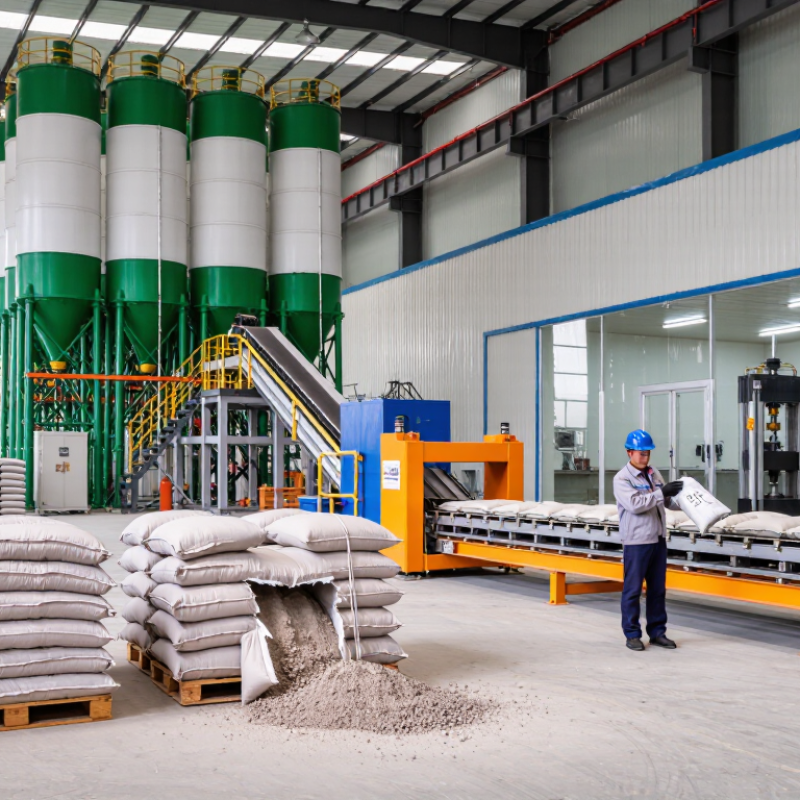
Cement Mortar Mix is a blend of cement, fine sand, and water. Some formulations also include lime or performance additives. Unlike concrete, it contains no coarse aggregate. Its main function is bonding, bedding, leveling, and filling masonry joints.
On site, workers spread it beneath concrete blocks, press it between bricks, or apply it over masonry as a render. A typical mortar joint is about 10 millimeters wide. The correct mix depends on wall load, exposure, and substrate absorption. ASTM C270 classifies mortar by strength and use, while EN 998-2 defines factory-made masonry mortar requirements. These standards support safer specification, but they do not replace field testing. Real walls are less cooperative.
The cement sector produces roughly 2.5 billion tonnes of CO2 emissions annually, according to the International Energy Agency’s 2023 cement report. This makes material efficiency important. A stronger mix is not automatically better; excessive cement can increase shrinkage, cracking, and cost. The Global Cement and Concrete Association reports that concrete remains the world’s most widely used construction material, which keeps mortar demand closely linked to urban growth. During practical inspections, technicians should check batch consistency, water measurement, curing, and joint adhesion. Small errors matter. Even skilled crews sometimes add water for easier spreading, weakening the hardened mortar later. A reliable supplier should provide test certificates, mix instructions, storage guidance, and traceable production records.
Cement mix mortar is made by combining cement, sand and water. The chart shows commonly used nominal cement-to-sand volume ratios for major construction applications.
A lower ratio number indicates a richer mortar with more cement. Actual specifications depend on structural requirements, local standards, sand grading, exposure conditions and the required workability.
Choosing a Chinese Cement And Mortar Mix supplier requires more than a low factory quotation. In project audits, I look for traceable raw materials, controlled batching, and consistent delivery records. The USGS Mineral Commodity Summaries 2024 estimated global cement production at 4.1 billion metric tons in 2023. That scale makes process discipline essential, not optional. A reliable supplier should disclose cement type, sand grading, admixture dosage, shelf life, and factory testing methods. Ask for current certificates, not recycled files.
Independent testing matters. Request compressive strength, water retention, open time, density, and bond strength results for the intended application. The supplier should clearly identify ASTM or EN test methods. ISO 9001 certification supports process control, but it cannot prove every bag performs well. Require batch numbers, retained samples, and a written complaint procedure. Small details matter. A pallet label should match the certificate and packing date.
Sustainability is another quality signal. UNEP’s 2023 Global Status Report for Buildings and Construction reported that buildings and construction caused 37% of global energy-related and process-related emissions in 2022. Suppliers should provide recycled-content information, product carbon data, and packaging options with evidence. Test the Cement And Mortar Mix on a real wall under local temperature and moisture conditions. Record mixing time, spread, curing, and failure points. Test before scaling. Do not trust a perfect sample alone. Factory visits help, although they can become staged. Unannounced follow-up testing is wiser.
When comparing cement mix mortar manufacturers in China, start with the production process, not the sales brochure. Ask how sand is dried, screened, and stored. Uneven moisture can change workability and strength. A reliable manufacturer should explain its Mortar Mix design, raw material sources, and batch control procedures clearly.
Request recent test reports, product samples, and a small trial order. Check setting time, bond strength, water retention, coverage, and packaging condition. Open several bags from different batches. The powder should look consistent, with no damp lumps or unusual odor. Factory audits can reveal more than polished photographs. Inspect laboratory equipment, storage areas, dust control, and production records. Also review technical support, export documents, lead times, and complaint handling. Fast replies matter when a shipment is delayed.
Price needs careful judgment. A very low quote may reflect cheaper fillers, weaker packaging, or limited testing. However, an expensive offer is not automatically better. Compare performance per square meter and the cost of rejected material. Ask whether the manufacturer can adjust the formula for climate, substrate, and application thickness. Small details matter. A trial may expose problems that paperwork misses, and specifications can be misunderstood across languages. Recheck every measurement, especially water dosage and curing conditions, before approving regular production.
The best supplier is not defined by price alone. Product standards should match the project, climate, and destination market. Cement mix mortar may follow Chinese GB/T requirements, EN 998-2, ASTM methods, or local building codes. Ask for the exact standard and product grade. General claims are not enough.
Reliable quality control starts with approved raw materials and calibrated laboratory equipment. Each batch should be checked for cement content, particle size, moisture, setting time, water retention, compressive strength, and bond strength. Factory records should connect test results with batch numbers and production dates.
Request recent reports, not only old certificates. Independent laboratory testing adds useful confidence, especially for large orders.
Certifications can support trust, but they cannot replace inspection. ISO 9001 shows a controlled management system, while product certificates should identify their scope and validity. Review sampling methods carefully.
A strong supplier can provide technical data sheets, safety documents, packaging details, and traceability records. Factory audits are even better. Check storage conditions, mixer cleanliness, pallet protection, and rejected-batch procedures. Small details matter.
A practical trial order can reveal more than a polished presentation. Test workability, adhesion, cracking, and curing under actual site conditions. Results may differ when water quality or temperature changes.
No supplier is perfect. Even a careful factory can miss a problem, so open communication and corrective-action records are important.
Choose evidence over impressive promises.
When evaluating a China cement mix mortar supplier, production capacity should be verified, not simply advertised. China Statistical Yearbook 2024 reported approximately 1.86 billion tonnes of cement output in 2023. This scale shows industrial depth, but it does not guarantee mortar consistency. Ask for monthly mortar output, mixer sizes, laboratory staffing, and recent batch records. A factory producing 10,000 tonnes monthly may still struggle during peak seasons. Capacity is not the whole answer.
Packaging affects moisture protection, handling, and site waste. The Global Cement and Concrete Association’s 2050 Roadmap notes that concrete use exceeds 14 billion cubic metres annually. That volume requires dependable material logistics. In practice, 20 or 25 kilogram moisture-resistant bags suit manual work. One-tonne bulk bags fit mechanized sites. Inspect liner thickness, sewing quality, pallet wrapping, and loading tests. Small weight errors become expensive across hundreds of pallets.
Customization should cover formula, color, setting time, application, and packaging language. Request technical data sheets, safety documents, sample approval, and independent test results. Important tests include compressive strength, water retention, adhesion, and open time. ISO 9001 certification supports process control, but certification alone proves little. I would request a trial order first. This feels slower. It can reveal torn bags, uneven powder, or unclear labels before full production.
Choosing a China-based Concrete Mortar Mix supplier requires more than comparing one quoted price. Pricing usually reflects cement grade, sand quality, additives, packaging, order volume, and Incoterms. Request a full cost sheet, including inland transport, export charges, insurance, and destination fees. A low factory price may become expensive after port handling and customs costs.
Export experience should be visible in documents, not only in sales claims. Ask for recent certificates of analysis, batch records, safety data sheets, and moisture-control procedures. The International Energy Agency reports that cement production creates about 7% of global energy-related CO2 emissions, so production efficiency and material traceability deserve attention. Sample testing also matters. One pale, dry bag proves little. Check setting time, compressive strength, water retention, and consistency under local conditions.
Tips: Compare prices using the same specifications and delivery terms. Confirm whether bags use moisture-resistant liners. UNCTAD’s Review of Maritime Transport reports that more than 80% of global merchandise trade by volume moves by sea. Delivery therefore depends on vessel space, port congestion, and seasonal disruptions. Ask for a realistic shipment window, not a perfect promise. Require pallet photos before loading and tracking documents after departure. I have seen delivery plans fail because production finished, but containers were unavailable. That possibility should be priced and discussed early. Procurement teams should also test one trial shipment before committing to a large order. Mistakes happen. A careful supplier explains them clearly.
Selecting a cement-mix mortar supplier requires more than comparing quotations. According to the IEA’s 2023 Cement report, cement production created about 2.5 gigatonnes of direct CO2 emissions in 2022. The GCCA also identifies cement and concrete as responsible for roughly 7% of global emissions. A responsible supplier should therefore show progress in energy efficiency, recycled content, and lower-carbon materials.
Ask for recent laboratory reports, batch records, and certificates matching EN 998-2 or ASTM C270. Check compressive strength, water retention, workability, setting time, and bond performance. Request samples from different production batches. Small details matter. A reliable factory should explain its water ratio clearly, not hide behind general claims. Factory audits can also reveal storage conditions, moisture control, and packaging quality.
Price still tempts buyers. Yet cheaper mortar may create cracking, waste, or delayed installation. Compare delivered cost, not bag price. Review production capacity, lead times, export documents, and complaint handling. I would not assume a large factory always performs better. Some suppliers provide impressive documents but weak technical support. Ask for project references, while checking whether those projects used the same formulation. A practical trial on site often exposes problems earlier than a polished sales presentation.
China’s ready-mix concrete industry is increasingly seeking ultrafine mineral admixtures that improve performance while supporting efficient, sustainable production. Market analyses commonly highlight the growing demand for supplementary cementitious materials, driven by infrastructure development, stricter quality expectations, and the need to reduce cement consumption. In this environment, a composite ultrafine powder made from ground granulated blast-furnace slag (GGBFS) and fly ash offers a practical solution for concrete producers seeking better workability, durability, and consistent batch performance.
Designed specifically for ready-mix applications, this premium admixture helps maintain a stable slump during transportation, reducing the risk of excessive stiffening before placement. Its finely processed composition supports smooth pumping and easier placement, even on demanding construction sites, while contributing to reliable strength development and long-term concrete durability. As a specialized factory supplier in China, we provide consistent product quality, technical support, and application-focused solutions for ready-mix producers. The material can be incorporated into tailored mix designs for commercial buildings, bridges, roads, and other major construction projects, helping manufacturers improve operational efficiency and deliver dependable concrete performance.
Examine production, not brochures. Ask how sand is dried, screened, and stored. Uneven moisture changes workability and strength. Request the formula, raw material sources, and batch controls. Clear explanations matter.
Request recent reports and samples from several batches. Check setting time, bond strength, compressive strength, water retention, and coverage. Test them under local conditions. One dry bag proves little.
Open multiple bags from different batches. The powder should look even and dry. Avoid damp lumps or unusual odors. Check packaging seams and inner liners. Samples can mislead.
Inspect laboratories, storage areas, dust controls, and production records. Check moisture protection around raw materials and finished bags. Compare records with sample results. Photographs are not enough.
Compare identical specifications and delivery terms. Include inland transport, export charges, insurance, port handling, and destination fees. Judge cost per square meter, not bag price. Cheap mortar may create waste or cracks. Expensive is not automatically better.
Ask for a realistic shipment window. Confirm capacity, lead times, container availability, and seasonal risks. Request pallet photos before loading and tracking documents after departure. Delays happen. Price that risk early.
Ask whether the formula can match the climate, substrate, and application thickness. Confirm water dosage and curing conditions in writing. Recheck every measurement. Small misunderstandings become expensive.
Review technical support, export documents, complaint handling, and response speed. Ask for references using the same formulation. Run a small trial order before committing. I would not assume a large factory performs better.
Cement Mix Mortar is a pre-blended construction material used for masonry, block laying, plastering, tile installation, and other building applications. A dependable Chinese supplier should offer consistent formulation, strong bonding performance, suitable workability, stable setting time, and reliable durability. Buyers should compare manufacturers by examining raw material selection, production processes, laboratory testing, product consistency, and experience with different project requirements.
Quality standards and certifications help verify that products meet recognized performance and safety expectations. In addition, customers should assess production capacity, packaging quality, private-label or customized options, and the supplier’s ability to maintain stable deliveries. Pricing should be evaluated together with product specifications, export experience, documentation, shipping arrangements, and after-sales communication rather than considered alone. The best supplier for a project will be one that combines dependable Cement Mix Mortar quality, transparent communication, flexible service, competitive total cost, and the capacity to support both current orders and future construction needs.