Where there's space - there's possibility

Finding the right Coal Fly Ash supplier in China isn't just about comparing price tags. It’s really about making a smart choice based on verified quality, consistent production, and solid technical info. Keep in mind, the quality of coal fly ash can differ from one power plant to another—even within the same region. You might notice variations in things like loss on ignition, moisture content, fineness, and chemical makeup from batch to batch.
Dr. Tarun R. Naik, a well-respected researcher in the coal ash world, once said, “Fly ash is a valuable resource when it’s properly characterized and responsibly used.” That advice still holds true, especially for international buyers. So, don’t just look at a fancy website—ask the suppliers for recent lab reports, representative samples, their production capacity, and traceability records. Make sure their testing adheres to recognized standards like ASTM or EN. And remember, a slick website doesn’t always equal technical reliability.
Sometimes, the little details tell you a lot. For example, does the supplier explain how they store their material? Can they stick to consistent loading schedules? Do the export teams really understand packaging requirements, port handling, and necessary paperwork? These things matter when your material finally arrives at your cement plant or concrete batching site. Some suppliers might send perfect samples, but then struggle to deliver the same quality in consistent shipments—something that’s easy to miss at first glance.
You might also come across links or keywords like “Coal Ash Fly Ash,” but just so you know, “Coal Fly Ash” is the industry standard term. Clear and accurate communication helps avoid mix-ups with specs. It’s smart to compare at least three qualified suppliers, ask for independent testing results, and even check out customer references before making a final call. Nobody’s perfect, and even the best partner needs some monitoring because things can shift if their fuel sources or operating conditions change. So, remember: the cheapest option isn’t always the best. In fact, the real winner is the supplier who can prove consistent quality, communicates honestly, and is willing to improve when issues pop up.
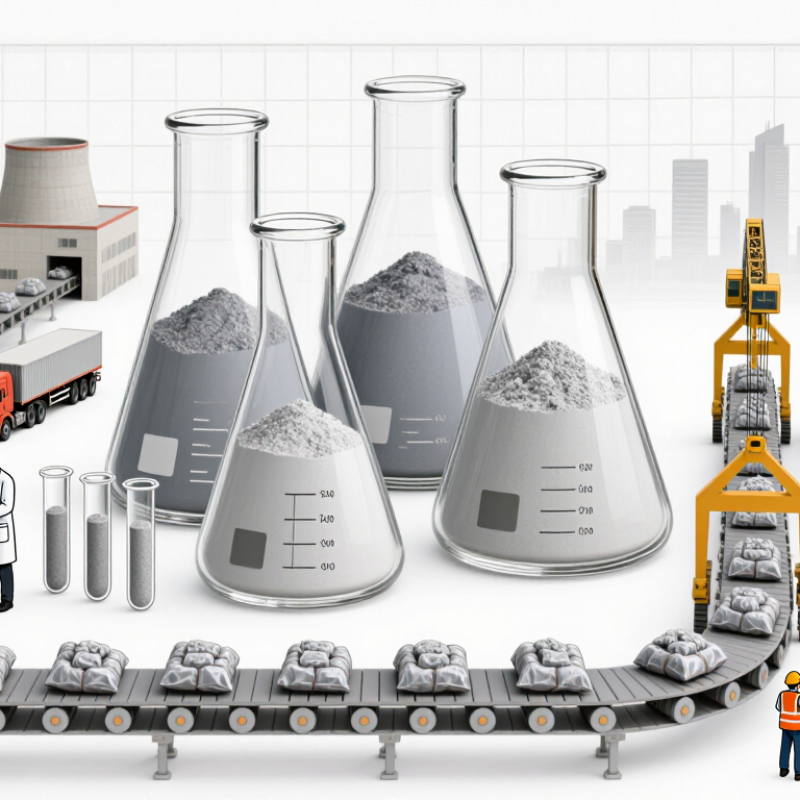
Coal Fly Ash differs by coal source, furnace temperature, and collection point. Low-calcium ash often resembles ASTM Class F ash, while high-calcium ash behaves closer to Class C. In China, GB/T 1596-2017 evaluates ash through fineness, water demand, moisture, and loss on ignition. Its three grades set loss-on-ignition limits of 5%, 8%, and 15%. Fineness limits are also strict, reaching 12%, 25%, and 45% residue on a 45-micrometre sieve. These figures matter beside a concrete mixer, not only on a certificate.
A dependable supplier should provide batch-level test reports, sampling dates, furnace details, and storage records. Check sulfur trioxide, free calcium oxide, chloride, moisture, and radioactivity where project specifications require them. ASTM C618 offers another useful comparison, especially for export-oriented projects. However, matching a Chinese grade with an ASTM class is not automatic. Chemistry and performance can diverge. I would request independent testing on at least three recent batches, then compare setting time, strength development, and water demand. Watch the silo.
The China Electricity Council’s industry statistics show China’s thermal power sector remains a major electricity source, so ash supply can be substantial. Yet high volume does not guarantee stable quality. A supplier may quote one elegant average while truckloads vary visibly in color and texture. That is a warning. During a site visit, inspect covered storage, moisture control, loading cleanliness, and traceability from furnace to shipment. Price deserves attention, but inconsistent Coal Fly Ash can increase admixture use, slow production, and weaken quality control.
Choosing a Fly Ash supplier in China requires more than comparing prices. Certificates are not enough. Ask for current ISO 9001 quality records, ISO 14001 environmental controls, and conformity with GB/T 1596, ASTM C618, or EN 450-1. Verify the certificate number, issuing body, scope, and expiry date. A copied PDF proves little.
Testing should cover fineness, moisture, loss on ignition, sulfur trioxide, chloride, free calcium oxide, and strength activity index. Request independent laboratory reports and monthly trend data, not one attractive sample. The International Energy Agency reported that cement production reached about 4.1 billion tonnes in 2022 and caused nearly 7% of global energy-related emissions. Consistent Fly Ash can support lower-clinker concrete, but only when its chemistry remains stable. Small variations can change water demand and setting time.
Production capacity needs physical evidence. Review silo volume, loading equipment, laboratory staffing, source power stations, and the last twelve months of shipment records. The Global Cement and Concrete Association’s 2050 roadmap stresses measurable emissions reduction and reliable material performance across supply chains. Therefore, request retained samples, batch traceability, calibration records, and a contingency plan for source interruptions. A supplier may claim 100,000 tonnes monthly, yet dispatch records could reveal seasonal limits. That gap deserves attention. Personal inspection is useful, but it is not infallible; weather, storage moisture, and changing coal sources can still affect results. A trial order with site-specific testing remains the safer decision.
When choosing a coal fly ash supplier in China, start with the material’s origin. Ask which power plants produce the ash, and whether sources change during the year. A reliable supplier should provide recent test reports for each source, not one old certificate. Check loss on ignition, fineness, moisture, chloride, and chemical composition. Dry Fly Ash needs special attention. It should arrive loose, dry, and free from hard lumps. During plant visits or video inspections, look for covered silos, sealed loading points, and calibrated weighing systems. These details show how the supplier controls contamination and moisture before dispatch. Past delivery records also matter: compare promised volumes with actual monthly shipments.
Supply stability depends on more than available inventory. Request a twelve-month supply plan and ask how the supplier handles power-plant maintenance, seasonal demand, and transport delays. The supplier should explain backup sources without hiding their different test results. Trial orders can reveal practical problems, such as uneven color, excessive moisture, or delayed documents. Keep retained samples from every batch. They help investigate disputes later. I would also check storage capacity near the loading area and the distance to the port or job site. A low price can become expensive when ash quality shifts between shipments. Still, no inspection removes every risk. Weather, production changes, and inaccurate forecasts can disrupt a careful plan. Record conversations, test results, and delivery performance over several months before increasing order volume.
Recommended evaluation weights for checking raw material sources, quality consistency, and supply stability
This procurement model gives the highest priority to verified raw material quality and source traceability. Key checks should include loss on ignition, moisture, fineness, water demand, strength activity, laboratory consistency, production capacity, delivery performance, and contingency stock. Quality requirements should be confirmed against the applicable contract specifications and Chinese standard GB/T 1596-2017 before approval.
Choosing the best coal fly ash supplier requires more than comparing the lowest quotation.
Price should be calculated per dry metric ton, including testing, loading, inland transport, and port charges. Ask for recent laboratory data covering fineness, moisture, loss on ignition, and chemical composition. These figures affect cement performance and rejection risk. The U.S. Geological Survey notes that coal combustion products are widely used in construction materials, but quality still varies by source and processing method.
Cheap material can become expensive after re-testing.
Logistics deserve equal attention.
UNCTAD’s Review of Maritime Transport 2023 states that over 80% of global trade by volume moves by sea. Compare vessel schedules, port distance, storage time, and demurrage terms. China received a 3.7 out of 5 score in the World Bank’s 2023 Logistics Performance Index. That indicates strong capability, not guaranteed execution.
Request the planned loading date and container route in writing. For powder, compare pneumatic bulk loading with one-ton moisture-resistant bags. Costs rise. Packaging must prevent rain exposure, torn seams, and hardening during long storage. Confirm pallet size and container weight limits against ISO requirements.
Export service should include commercial invoices, packing lists, certificates of analysis, certificates of origin, and accurate customs classification.
Ask whether the supplier can support pre-shipment inspection and retain samples. Incoterms 2020 should be stated clearly, especially responsibility for insurance and port handling.
I would not trust polished documents alone; batch traceability matters more.
Small details matter. A reliable supplier discloses normal variation, not only ideal test results, and admits when a shipment needs closer review.
Choosing the best coal fly ash supplier in China requires more than comparing prices or reviewing a certificate. Environmental compliance should be checked through current permits, emission records, and site conditions. During a factory visit, look for sealed storage silos, functioning dust collectors, covered transport routes, and controlled wastewater areas. Fine grey dust on ledges may indicate weak housekeeping. Certificates alone are not enough.
Responsible processing also depends on clear material identification. Ask the supplier to define each Fly Ash Type by source, class, test results, and intended application. An independent accredited laboratory should verify moisture, loss on ignition, fineness, chloride content, and leachable elements. Request batch records and compare a collected sample with the supplier’s retained sample. Storage time matters too. Poorly protected ash can absorb moisture and lose consistency.
A reliable supplier should explain failed tests, corrective actions, and worker protection procedures without avoiding difficult questions. Check training records, protective equipment, emergency plans, and dust monitoring. Transport documents should support traceability from the processing site to the delivery point. A polished facility can still hide weak controls. Repeated sampling is wiser than trusting one visit. No audit is perfect. Recording uncertainties honestly may prevent costly decisions later.
A reliable coal fly ash supplier in China should prove consistency, not just offer a low quotation. Request three sealed samples from different production dates. Check color, moisture, fineness, loss on ignition, and chemical composition. Ask for independent laboratory results against ASTM C618 or the agreed project specification. The American Coal Ash Association’s 2022 survey reported 68.6 million tons of coal combustion products were produced in the United States. This scale shows why batch control matters. Small quality changes can affect concrete strength, setting time, and transport costs.
Customer reviews need practical verification. BrightLocal’s 2023 consumer review survey found that 98% of consumers read online reviews for local businesses. However, reviews alone are weak evidence. Look for detailed comments about delivery accuracy, test documents, packaging, and complaint handling. Request two recent buyer references, preferably with similar order volumes. Check whether reviewers mention repeat purchases. A perfect rating may deserve more questions.
Tips: Compare the sample report with the actual sample. Confirm the report date and laboratory name. Photograph the sealed bags before testing. Do not rely on one sample. I have seen suppliers send excellent trial material, then deliver a different grade later. That risk is easy to overlook. Ask for a written batch-retention and replacement policy before signing. Keep one sealed reference sample for independent comparison.
High-strength GGBFS and fly ash composite powder is an advanced cementitious material developed for modern concrete production. By combining ultra-finely ground granulated blast furnace slag with carefully processed fly ash, it integrates the latent hydraulic activity of GGBFS with the pozzolanic characteristics of fly ash. This balanced composition can improve particle packing, reduce internal porosity, and support the production of denser, stronger cement-based materials.
Supplied by experienced manufacturers and factories in China, the composite powder is suitable for ready-mix concrete, precast components, infrastructure projects, and other demanding construction applications. Its refined particle size promotes better dispersion and workability, while its mineral composition can contribute to higher later-age strength, improved resistance to chemical attack, and enhanced durability under challenging environmental conditions. It may also help reduce cement consumption and associated carbon emissions when used as part of a carefully designed concrete mix.
Consistent quality control is essential for reliable performance. Professional production facilities typically monitor raw materials, fineness, chemical composition, moisture, and activity throughout the manufacturing process. With stable quality and flexible technical support, high-strength composite powder offers concrete producers an efficient solution for developing durable, high-performance construction materials.
Ask which power plants produce it and whether sources change seasonally. Request recent test reports for every source. Not one certificate. Record the source for each batch.
Check loss on ignition, fineness, moisture, chloride, and chemical composition. An independent accredited laboratory should verify important results. Compare supplier samples with your own collected samples. Small differences still deserve attention.
Dry ash should arrive loose, dry, and free from hard lumps. Inspect covered silos and sealed loading points. Check calibrated weighing systems. Keep it dry.
Request a twelve-month supply plan with expected monthly volumes. Ask about plant maintenance, seasonal demand, and transport delays. Compare promised shipments with actual deliveries. Forecasts can still fail.
Trial orders can reveal uneven color, excess moisture, or delayed documents. They show practical performance before larger commitments. Keep retained samples from every batch. That evidence helps during disputes.
Check current permits, emission records, and site conditions. Look for sealed silos, working dust collectors, and covered transport routes. Controlled wastewater areas also matter. Fine grey dust on ledges may signal weak housekeeping.
The supplier should define each type by source, class, test results, and intended use. Request batch records and transport documents. Trace the material from processing to delivery. Labels alone are not enough.
No audit is perfect. Repeat sampling and review performance across several months. Check failed tests, corrective actions, worker training, and dust monitoring. I might overlook hidden weaknesses during one visit. Record uncertainties honestly.
Choosing the best Coal Fly Ash supplier in China requires a careful review of product quality, consistency, and service capabilities. Buyers should first understand the differences between fly ash types and confirm whether the supplier follows recognized quality standards. Certifications, laboratory testing procedures, production capacity, and quality control systems can help verify that the material meets project requirements. It is also important to examine the source of raw materials and assess whether the supplier can provide a stable supply over the long term.
Beyond product specifications, buyers should compare pricing, transportation arrangements, packaging options, lead times, and export support. A reliable supplier should demonstrate responsible processing, effective environmental management, and compliance with applicable regulations. Before placing a large order, requesting samples and reviewing customer feedback can provide valuable evidence of product performance and business reliability. By evaluating these factors together, purchasers can reduce supply risks, control costs, and establish a dependable cooperation with a qualified Chinese Coal Fly Ash supplier.