Where there's space - there's possibility

So, choosing reliable Slag Powder suppliers? It's not just about price tags, production numbers, or a slick website. Global buyers really need stable chemistry, controlled fineness, testing they can trace, and delivery that shows up when promised. A supplier might look great on paper, but then performance shifts from one shipment to the next. Annoying? Yes. But that's exactly the kind of detail worth paying attention to.
Slag powder is usually used as a supplementary cementitious material, especially in blended cement and concrete. Its value comes down to things like the quality of granulated blast furnace slag, grinding technology, moisture control, and how it's stored. Buyers should dig into test reports, mill certificates, technical data sheets, and previous export experience. A practical checklist might include particle-size distribution, 45-micron residue, glass content, activity index, and setting-time behavior. Small differences? They matter more than you'd think.
Professor Karen Scrivener, a well-respected cement materials scientist, once said, 'There is no silver bullet.' That line fits Slag Powder sourcing almost perfectly. No single supplier works for every project, climate, or delivery route. The best pick depends on the grade you need, local standards, cement compatibility, and port access. A strong supplier should also be upfront about limitations. That's what builds trust.
This guide looks at ten Slag Powder suppliers serving global buyers. It weighs manufacturing capacity, quality systems, product consistency, packaging options, technical support, and logistics. Some companies may not look all that impressive on paper but perform well during plant trials. Others might have amazing lab results yet struggle with shipping schedules. So buyers should stay critical. Supplier rankings are helpful, sure—but independent verification is still a must before you sign a long-term contract.
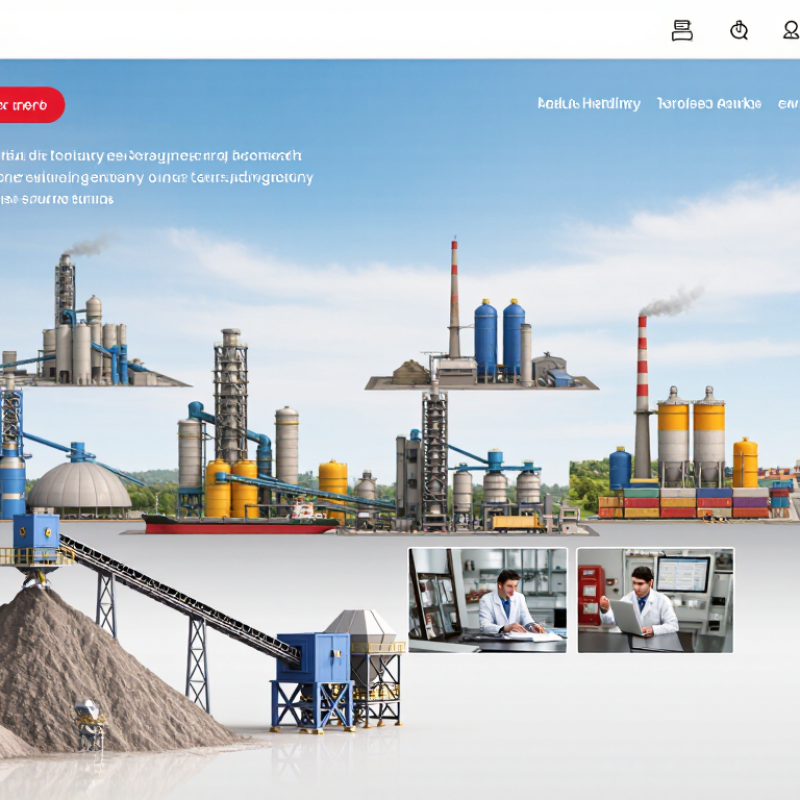
Slag powder usually means ground granulated blast-furnace slag, or GGBFS. It comes from molten ironmaking slag, rapidly cooled with water, then finely ground. This process creates a latent hydraulic material. When mixed with cement and water, it gradually forms cementing compounds.
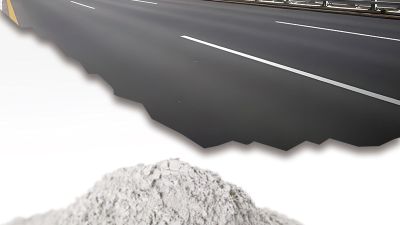
The U.S. Geological Survey reported roughly 14 million metric tons of iron and steel slag sold in the United States in 2023. That volume shows its established industrial role. GGBFS is used in concrete, blended cement, precast products, and infrastructure projects. It can reduce clinker demand, improve sulfate resistance, and lower hydration heat. The International Energy Agency estimates that cement production creates about 7% of global carbon dioxide emissions. Replacing part of clinker can therefore support lower-carbon construction.
Performance depends on more than fineness. Chemical composition, glass content, moisture, grinding quality, and storage conditions all matter. ASTM C989/C989M and EN 15167-1 provide useful performance and conformity frameworks. Buyers should request recent test reports, including activity index, sulfur content, chloride content, and loss on ignition. Moisture changes everything. A neat specification can still hide variability between batches. Slag powder is not magic, and it may react more slowly in cold weather. Trial mixes, independent testing, and shipment-level documentation remain practical safeguards for global procurement.
A reliable slag powder supplier should provide clear chemical data for every production lot. Review calcium oxide, silica, alumina, magnesium oxide, sulfur, and loss on ignition. Fineness matters. Ask for Blaine values, sieve results, and particle-size distribution. These figures affect cement hydration, strength development, and water demand.
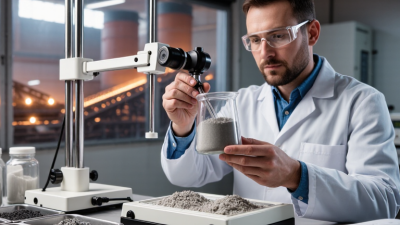
Request recent test reports from an independent laboratory, not only a sales brochure. Check whether the supplier follows recognized quality systems and product standards in your target market. Traceability should connect each shipment to its furnace source, processing date, and test record.
A sealed sample can reveal moisture, color, packing quality, and handling problems before a full order. Small tests prevent expensive surprises.
Consistency deserves more attention than a single impressive result. Compare several lots, especially after seasonal changes or raw-material shifts. Ask about drying controls, magnetic separation, storage capacity, and contamination prevention. Confirm loading methods, container protection, delivery terms, and export documentation. A low price may hide unstable quality or higher freight losses. Supplier websites can look authoritative, but direct verification remains essential. Even experienced buyers sometimes overvalue certificates and underestimate communication delays. A practical trial order, written specifications, and agreed acceptance limits create stronger evidence than promises.
International buyers should evaluate slag powder suppliers by verified performance, not shipment volume alone. The World Steel Association reported about 1.89 billion tonnes of crude steel production in 2023. This indicates a substantial global source of granulated blast-furnace slag. The USGS estimated United States iron and steel slag output at approximately 15 million metric tons in 2023. However, availability differs by region, season, and furnace operations.
For a practical top-ten supplier review, compare grinding fineness, chemical stability, moisture control, and monthly capacity. Ask for recent test certificates covering glass content, slag activity, chloride levels, and particle-size distribution. Suppliers offering Ultrafine Slag Powder should provide consistent Blaine values and clear storage guidance. International buyers also need export experience, container loading photos, and reliable lead times. A low price can hide port delays or inconsistent batches. No ranking is perfect.
Tips: Request three production-lot samples before signing a contract. Check whether the supplier follows relevant ASTM, EN, or local standards. Confirm Incoterms, packaging weight, inspection rights, and rejection procedures. A qualified technical team should explain mix-design adjustments for cement, concrete, or geopolymer applications. I would also review the supplier’s environmental data. Carbon claims are useful, but they still require independent evidence.
Choosing reliable slag powder suppliers requires more than comparing prices. Product quality begins with consistent chemical composition and stable grinding control. Ask for recent test reports covering CaO, SiO₂, Al₂O₃, MgO, and SO₃ levels. Moisture should also remain low, especially when powder travels through humid ports. A clear certificate of analysis helps buyers verify each shipment.
Grades often differ by fineness and reactivity. Ultra-Fine Slag Powder may provide faster early strength, but performance depends on cement chemistry and curing conditions. Check the Blaine fineness, particle-size distribution, density, and activity index at 7 and 28 days. Some suppliers report only average values. That is not enough. Request batch-based data, sampling procedures, and testing standards. Packaging details matter too. Moisture-resistant bags, sealed bulk containers, and traceable lot numbers reduce handling risks.
Technical support separates experienced suppliers from simple traders. A qualified team should explain recommended replacement ratios, mixing behavior, setting time, and compatibility with admixtures. Ask whether trial samples are available before placing a large order. Results can change between laboratories. Even experienced buyers may overlook this. Supplier audits, production records, and loading inspections add practical confidence. Still, no supplier is flawless. Weather, raw material variation, and transport delays can affect delivery and performance. Buyers should record actual concrete results and review specifications after each project.
The chart compares the minimum strength activity index requirements commonly referenced for ASTM C989/C989M Grade 80, Grade 100, and Grade 120 ground granulated blast-furnace slag. Higher values indicate stronger cementitious performance relative to the reference cement.
Strength activity index is expressed as the compressive strength of the slag-cement mixture as a percentage of the reference cement mortar. Buyers should also verify fineness, moisture, chemical composition, sulfate content, loss on ignition, alkali contribution, test method, and batch-to-batch consistency through supplier test certificates.
For global buyers, Building Materials Slag Powder suppliers must prove more than competitive pricing. A practical offer should show the powder’s fineness, moisture, chemical composition, and test frequency. The International Energy Agency reports that cement production creates nearly 7% of global energy-related CO2 emissions. Therefore, verified slag content can support lower-carbon construction claims, but only with reliable test records. A low quote can be misleading.
Packaging affects both product quality and landed cost. Bulk tankers suit large projects, while 25 kg bags or one-ton flexible bags fit smaller deliveries. Bags need moisture barriers, strong stitching, and clear batch labels. According to UNCTAD’s Review of Maritime Transport, ships carry over 80% of international merchandise trade by volume. Export-ready suppliers should provide container loading photos, pallet details, safety data sheets, certificates of origin, and accurate HS classification. Port congestion still creates risk.
Tips: Ask for three recent laboratory reports. Compare prices on a delivered basis. Confirm whether freight, insurance, and terminal fees are included. Check storage conditions at the destination. The World Bank’s 2023 Logistics Performance Index shows that customs, tracking, and delivery reliability differ greatly between markets. I would also request a small trial shipment. It may expose caking, torn bags, or inconsistent color before a full contract. Those details are easy to overlook.
| Rank | Supplier Reference | Primary Supply Region | Typical Product | Common Fineness | Indicative FOB Price | Standard Packaging | Typical MOQ | Production Lead Time | Common Export Port | Logistics Capability | Export Documentation |
|---|---|---|---|---|---|---|---|---|---|---|---|
| 1 | Supplier Reference A | East Asia | Ground granulated blast-furnace slag | 3,000–4,000 cm²/g Blaine | US$24–42/MT | 25 kg bags, 500–1,500 kg jumbo bags, bulk vessel | 500 MT | 15–25 days | Major container and bulk terminals | Container, breakbulk, and bulk vessel loading | Commercial invoice, packing list, certificate of origin, SDS, mill certificate |
| 2 | Supplier Reference B | Southeast Asia | Low-carbon cementitious slag powder | 3,500–4,500 cm²/g Blaine | US$28–48/MT | Moisture-resistant paper bags, jumbo bags, bulk | 300 MT | 18–30 days | Regional deep-water seaports | FCL consolidation and bulk shipment coordination | Invoice, packing list, origin certificate, quality certificate, SDS |
| 3 | Supplier Reference C | South Asia | GGBFS for concrete and blended cement | 3,000–4,200 cm²/g Blaine | US$26–46/MT | 25 kg laminated bags, 1 MT jumbo bags, bulk | 500 MT | 20–35 days | Large industrial export ports | FCL, breakbulk, and port-to-port bulk options | Invoice, packing list, certificate of origin, test report, SDS |
| 4 | Supplier Reference D | Middle East | High-reactivity slag powder | 4,000–5,000 cm²/g Blaine | US$32–55/MT | 1.0–1.5 MT jumbo bags or pneumatic bulk tanker | 1,000 MT | 15–28 days | Gulf-region bulk terminals | Bulk vessel, silo discharge, and container loading | Commercial invoice, packing list, origin certificate, COA, SDS |
| 5 | Supplier Reference E | Europe | EN 15167-compatible ground slag | 3,500–5,000 cm²/g Blaine | US$42–72/MT | Bulk tanker, silo delivery, and jumbo bags | 500–1,000 MT | 20–35 days | North Sea, Baltic, and Mediterranean ports | Bulk vessel chartering and multimodal inland delivery | Invoice, packing list, origin certificate, product declaration, test report |
| 6 | Supplier Reference F | North America | ASTM C989-grade slag cement material | 4,000–6,000 cm²/g Blaine | US$50–85/MT | Bulk pneumatic tanker, rail hopper, jumbo bags | 1,000–2,000 MT | 25–45 days | Atlantic, Gulf, and Pacific terminals | Rail-to-port, bulk vessel, and full-container logistics | Invoice, packing list, origin certificate, ASTM test data, SDS |
| 7 | Supplier Reference G | Latin America | Granulated blast-furnace slag powder | 3,000–4,000 cm²/g Blaine | US$30–52/MT | 25 kg bags, 1.0 MT jumbo bags, bulk | 500 MT | 25–40 days | Atlantic and Pacific export ports | Containerized cargo and geared bulk vessel service | Invoice, packing list, certificate of origin, COA, SDS, fumigation record when applicable |
| 8 | Supplier Reference H | Oceania | Concrete-grade ground slag | 3,500–4,500 cm²/g Blaine | US$45–78/MT | Bulk vessel, pneumatic tanker, and jumbo bags | 1,000 MT | 25–45 days | Deep-water regional ports | Bulk shipping, container loading, and domestic transfer | Invoice, packing list, origin certificate, technical data sheet, SDS |
| 9 | Supplier Reference I | East Africa | Cement-blending slag additive | 3,000–4,000 cm²/g Blaine | US$34–60/MT | 50 kg bags, jumbo bags, and bulk containers | 300–500 MT | 20–35 days | Indian Ocean export terminals | FCL shipment, transshipment, and regional port delivery | Invoice, packing list, certificate of origin, COA, SDS |
| 10 | Supplier Reference J | Central and Eastern Europe | Premium finely ground slag powder | 4,000–5,500 cm²/g Blaine | US$45–80/MT | Bulk tanker, 1.0–1.5 MT jumbo bags, palletized bags | 500–1,000 MT | 20–40 days | Baltic, Adriatic, and Black Sea ports | Bulk vessel, rail, truck, and multimodal delivery | Invoice, packing list, origin certificate, product declaration, COA, SDS |
Selecting a reliable Ground Granulated Blast Furnace Slag Powder supplier requires more than comparing prices. Check the source furnace, granulated material quality, glass content, fineness, moisture, and chemical consistency. The World Steel Association reported about 1.89 billion tonnes of crude steel production in 2023, showing the scale of potential slag supply. However, large supply does not guarantee stable performance.
Ask for recent test reports, certificates, and batch-level chemical data. Key values include SiO₂, Al₂O₃, CaO, MgO, sulfur, chloride, and loss on ignition. Confirm compliance with relevant standards, such as ASTM C989 or EN 15167, depending on your market. The U.S. Geological Survey has reported roughly 16 million metric tonnes of iron and steel slag sales in recent U.S. data, but classifications can differ between countries. That detail is easy to overlook.
Tips: Request three consecutive batch reports. Compare Blaine fineness, not only percentages. Check packing, loading, port access, and delivery history. A supplier should explain test methods clearly. Ask about storage conditions, too. Moisture can quietly damage handling efficiency. I would also test a small shipment before signing a long contract. Supplier documents may look complete, yet field results can disagree. This is where careful buyers learn. Keep written records of sampling, shipment dates, and corrective actions. A low quote may hide inconsistent grinding or costly port delays. Reliable technical support matters when concrete trials reveal unexpected setting changes.
Ultra-fine GGBFS–fly ash blends are becoming increasingly valuable in high-performance concrete, where durability, workability, and lower clinker consumption are major priorities. The International Energy Agency’s *Cement Tracking Report 2023* identifies clinker substitution and improved material efficiency as essential measures for reducing cement-sector emissions. In this context, finely processed mineral additions can contribute to lower embodied carbon while improving particle packing and paste performance.
A China-produced ultra-micro composite powder, formulated from ground granulated blast-furnace slag (GGBFS) and fly ash, offers a D50 of 14.73 μm. Its ultra-fine particle distribution enhances the micro-aggregate effect, helping fill voids between cement grains and potentially producing a denser concrete matrix. GGBFS can contribute to long-term strength and resistance to chloride ingress, while fly ash may improve workability and reduce heat development in mass concrete. These characteristics support applications such as infrastructure, precast components, marine structures, and high-specification commercial construction.
The Global Cement and Concrete Association’s *2050 Concrete Future Roadmap* reports that concrete-related emissions account for approximately 7% of global carbon dioxide emissions, reinforcing the importance of supplementary cementitious materials. Sourcing from experienced mineral powder factories in China can provide access to advanced grinding and classification systems, consistent particle-size control, and scalable production. Quality-focused suppliers should also provide test data covering fineness, chemical composition, loss on ignition, moisture, activity performance, and batch consistency for reliable project qualification.
Slag powder is finely ground, rapidly cooled ironmaking slag. Mixed with cement and water, it gradually forms cementing compounds.
It can replace part of the clinker. This may reduce hydration heat, improve sulfate resistance, and support lower-carbon construction.
No. Fineness, glass content, moisture, chemistry, and storage conditions affect performance. Large supply does not guarantee stable results.
Request activity index, fineness, moisture, sulfur, chloride, and loss on ignition. Also review chemical values for silica, alumina, calcium, and magnesium.
Compare delivered costs, including freight, insurance, terminal fees, and customs charges. A low quote may hide expensive port delays.
Bulk tankers suit large construction sites. Smaller projects may use 25-kilogram bags or one-ton flexible bags with moisture barriers.
Bags need strong stitching, clear batch labels, and protection from moisture. Keep the powder dry, because caking can reduce handling efficiency.
Yes, when practical. A small shipment may reveal caking, torn bags, color changes, or inconsistent grinding before a larger contract.
Yes, especially in cold weather. Trial concrete mixes can reveal setting changes, but field results may still disagree with paperwork.
This guide explains what Slag Powder is, how it is produced, and why it is widely used in cement, concrete, infrastructure, and other construction applications. It outlines the main benefits of Slag Powder, including improved durability, enhanced workability, reduced heat generation, and support for more resource-efficient building practices. For global buyers, the article also introduces key criteria for evaluating suppliers, such as product consistency, quality control, certifications, technical support, production capacity, and export experience.
The guide compares ten types of leading Slag Powder suppliers without focusing on specific brand names, helping readers understand differences in grades, chemical composition, fineness, packaging, pricing, delivery terms, and logistics capabilities. It concludes with a practical selection framework based on project requirements, order volume, destination, budget, documentation, and long-term supply reliability, enabling buyers to choose a suitable supplier with greater confidence.