Where there's space - there's possibility

Picking reliable concrete cement manufacturers isn’t just about looking at who’s got the biggest production numbers or who’s making the loudest website claims. For buyers around the world, it’s really about digging a little deeper—checking consistency in quality, delivery capabilities, tech support, and whether they meet recognized construction standards. Usually, cement comes in bulk tankers or moisture-resistant bags, while ready-mix concrete tends to be produced pretty close to where you’re building. This little difference can impact freight costs, storage requirements, and your overall decision-making process.
In this guide, I’ll introduce you to some big players like Holcim, Heidelberg Materials, Cemex, Votorantim Cimentos, and UltraTech Cement. Keep in mind, their strength really varies depending on your region—things like product range, how many plants they have, and their focus on sustainability. A good supplier should be able to send you up-to-date technical data sheets, test certificates, traceability info for each batch, and clear instructions on how to store their products. These details become super important—especially if a shipment arrives just before a major foundation pour.
Now, don’t forget—quality isn’t the same everywhere. Different plants might use unique raw materials, grinding methods, and quality checks. So, don’t just rely on big brands. It’s worth verifying what’s actually available locally. And if you want to be extra sure, independent lab testing can reveal differences in things like setting times, strength, and sulfate resistance. I know, that sounds like more hassle, but honestly, it’s worth it to keep your project safe and on track.
I should also mention, the companies I talk about here aren’t ranked as the absolute best everywhere. Market conditions, certifications, pricing, and delivery reliability can change pretty quickly. Some claims should be double-checked. Before you make a final call, it’s smart to compare supplier documents, check regional references, and review the contract details. Taking these steps helps ensure you’re sourcing the right material for projects like infrastructure, commercial buildings, precast components, or residential developments—all with a bit more peace of mind.

Top Concrete Cement Manufacturers for Global Buyers
Global Cement Market Scope: 4.1 Billion Tonnes Produced in 2023
Global cement production reached approximately 4.1 billion tonnes in 2023, according to the United States Geological Survey’s Mineral Commodity Summaries 2024. This volume reflects enormous construction demand across Asia, Africa, the Middle East, Europe, and the Americas. It also shows why manufacturer selection requires more than comparing prices. Buyers should examine clinker quality, grinding consistency, export capacity, and documented compliance.
The International Energy Agency reports that cement production creates roughly 7% of global energy-related carbon dioxide emissions. This figure makes efficiency increasingly important. Manufacturers using blended cement, supplementary materials, and lower-energy kilns may offer measurable environmental advantages. However, production statistics are estimates, and reporting methods differ between countries. That limitation deserves attention. A supplier with excellent technical data may still face port delays, inconsistent local standards, or limited replacement capacity.
Tips: Ask for recent test certificates, batch consistency records, and loading photographs. Confirm whether the quoted product matches ASTM, EN, or another required standard. Review moisture protection carefully. A torn bag can become a costly problem before installation. Compare landed cost, not only the factory price. The Global Cement and Concrete Association also highlights sector-wide decarbonization targets, so buyers should request verified emissions information where available. Some claims remain difficult to compare. Independent laboratory checks are still worthwhile.
Ranking top cement manufacturers requires more than comparing annual output. Capacity should reflect usable production, not only a company’s advertised figure. Check kiln count, maintenance records, energy efficiency, and average operating rates. A plant producing 3 million tonnes reliably may serve buyers better than a larger plant facing frequent shutdowns. Request recent production data and independent verification where possible.
Quality depends on consistent chemistry, testing discipline, and product suitability. Review certificates, laboratory procedures, and test results for strength, setting time, and moisture control. Concrete & Cement buyers should also examine how products perform in local weather and construction conditions. A strong technical team matters. Still, paperwork can look perfect while field performance varies. Trial orders and site feedback deserve serious weight.
Tips: Compare delivered cost, not factory price. Map port access, inland transport, storage capacity, and customs experience. Ask for lead times during peak seasons. Evaluate how quickly the supplier handles damaged cargo or specification disputes. Regional distribution centers can reduce delays, but they may increase handling costs. Reach is not just geographic coverage; it is dependable service after the sale. My ranking would remain adjustable, because fuel prices, regulations, and plant reliability can change within months.
Leading global cement producers serve buyers through large quarries, modern plants, and regional distribution networks. Their scale supports reliable supply for housing, bridges, ports, and industrial flooring. Still, production quality can vary between locations. Buyers should examine the specific plant, not only the corporate profile.
A dependable supplier provides test certificates, chemical specifications, and clear delivery records. Look for consistent clinker quality, controlled grinding, and stable setting times. For a Concrete Cement Mix, technical support matters when temperatures, moisture, or transport distances change. A site engineer may request trial batches before approving a large order. That practical step can expose problems early.
Environmental performance also deserves close attention. Leading producers increasingly use alternative fuels, supplementary cementitious materials, and lower-carbon production methods. Ask for verified emissions data rather than relying on broad sustainability claims. No supplier is flawless. Documentation may be incomplete, and local performance can disappoint despite strong global systems. Experienced buyers compare samples, inspect storage conditions, and confirm after-sales support before signing a long-term contract. Small details matter.
Asia’s cement giants shape the global Cement And Concrete supply chain through scale, logistics, and technical experience. A state-linked Chinese building-materials group serves large infrastructure projects and operates extensive production networks. Another leading Chinese producer is known for efficient kilns, strong domestic distribution, and exports across nearby markets. Buyers should examine plant location, port access, and clinker availability before comparing prices.
India’s largest private cement producer has expanded through regional grinding units and integrated plants. Its broad distribution network can support demanding construction schedules, although transport costs may vary sharply between states. A major Thai industrial group adds another perspective, combining cement production with ready-mix concrete and building materials. Its experience in humid climates can benefit projects exposed to heavy rainfall and coastal air.
Procurement teams should request recent test reports, batch consistency data, and certificates from accredited laboratories. Check compressive strength, setting time, fineness, and chloride limits against project specifications. A shipment may look competitive until demurrage or inland trucking changes the calculation. Small details matter.
Site visits reveal practical issues that brochures often omit, including dusty loading areas, inconsistent packaging, or delayed dispatch records. I would not rely on reputation alone. Market leaders can still face maintenance stoppages, uneven regional quality, or communication gaps. A careful buyer compares samples, verifies production dates, and confirms dispute procedures before signing a long-term supply agreement.
China and India accounted for the largest shares of cement production among the selected markets in 2023. The figures are reported in million metric tons and are based on estimates published in the U.S. Geological Survey Mineral Commodity Summaries 2024.
Global cement buyers should treat standards as working controls, not decorative claims. ASTM C150 defines Portland cement types and sets chemical and physical requirements. EN 197-1 classifies common cements by composition and strength performance. These systems overlap in purpose, but they are not interchangeable.
Ask for current test reports, product data sheets, and batch traceability before placing an order. A reliable supplier should identify the cement type, strength class, setting time, soundness, and compressive strength results. Check whether laboratory methods match the declared standard. A pallet label should connect clearly to its certificate. Small details matter.
ISO 9001 addresses the quality management system, not cement chemistry or concrete performance. Certification can show controlled procedures, corrective actions, and documented inspections. It does not replace ASTM C150 or EN 197-1 testing.
For Concrete Special Cement, buyers should request application-specific evidence, such as heat-of-hydration data or sulfate-resistance results, when relevant. Field conditions can expose weaknesses that factory reports miss. Humidity, storage time, and mixing water may change performance. Paperwork can look complete and still hide gaps. I would also question unusually broad claims, especially when no independent test date is provided. A retained sample and a pre-shipment inspection offer practical protection. They are not perfect. But they make quality decisions more transparent.
Global buyers should assess concrete cement manufacturers through measurable operating data, not production claims. Clinker ratio is a practical starting point. Lower clinker content usually reduces process emissions, because clinker production requires limestone heating. However, excessive substitution can affect early strength, setting time, or local standards. The IEA reports that cement production contributes about 7% of global energy-related and process CO₂ emissions. Ask for certified test results, clinker declarations, and performance records for comparable climates.
CO₂ intensity should be reviewed per tonne of cement, with boundaries clearly stated. The Global Cement and Concrete Association’s 2050 Roadmap identifies clinker reduction, alternative fuels, and carbon capture as major decarbonisation levers. A supplier reporting only factory emissions may appear cleaner than one reporting full operational impacts. That comparison is imperfect. Request third-party verification and recent plant-level data.
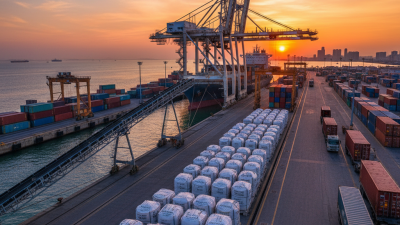
Logistics can erase environmental and financial advantages. UNCTAD’s Review of Maritime Transport confirms that ships carry over 80% of global merchandise trade by volume. Buyers should examine export capacity, berth depth, loading rates, storage space, and backup terminals. A plant near a reliable port may outperform a larger inland facility during seasonal demand. Check monthly shipment history, average lead times, demurrage exposure, and available vessel options. Export capacity must be proven, not promised. Small details matter. A delayed clinker shipment can stop grinding operations for days.
| Buyer Metric | Cement Category / Benchmark | Indicative Data Range | Why It Matters to Global Buyers | Recommended Verification | Reference Basis |
|---|---|---|---|---|---|
| Clinker ratio | Ordinary Portland cement / CEM I | 95–100% clinker, excluding minor additional constituents | Usually offers high early strength, but typically carries a higher embodied-carbon profile than blended cement. | Request the product standard, mill certificate, and declared clinker factor for the shipment lot. | EN 197-1 cement composition classes |
| Clinker ratio | Portland-composite / blended cement | 65–94% clinker for common CEM II classes; exact limits depend on the constituent type. | Can reduce clinker demand while maintaining performance suitable for many general construction applications. | Check the percentage and type of limestone, slag, fly ash, pozzolan, or other permitted constituent. | EN 197-1 CEM II composition classes |
| Clinker ratio | Slag cement / CEM III family | 5–64% clinker, depending on CEM III subtype | Often provides lower clinker intensity and favorable durability characteristics, but strength development can be slower in some formulations. | Confirm slag content, strength class, setting time, and local acceptance under the destination standard. | EN 197-1 CEM III composition classes |
| CO₂ intensity | Cement, cradle-to-gate screening range | Approximately 0.35–0.95 t CO₂e/t cement, depending mainly on clinker content, kiln fuel, electricity, and allocation rules. | A lower declared intensity can support green-building targets, carbon reporting, and procurement requirements. | Request a product carbon footprint or EPD stating system boundary, year, emission factors, and allocation method. | GCCA Cement Industry GHG Protocol; ISO 14025 and ISO 21930 principles |
| CO₂ intensity | Global industry screening benchmark | About 0.6–0.7 t CO₂ per tonne of cement is a commonly cited global-order benchmark; plant-level results vary materially. | Useful for comparing declarations, but it should not replace an independently verified product-specific figure. | Compare like-for-like data: cement versus clinker, direct versus indirect emissions, and the same reporting year. | International Energy Agency and GCCA sector benchmarks |
| Shipment logistics | Bulk maritime delivery | Typical parcel sizes: 3,000–10,000 tonnes for smaller bulk carriers; larger geared or Panamax shipments can exceed 50,000 tonnes. | Larger parcels can reduce freight cost per tonne, but require suitable draft, berth equipment, storage, and unloading rates. | Verify port draft, berth length, unloading equipment, laycan, demurrage terms, and maximum parcel size. | Common dry-bulk vessel operating ranges; port-specific confirmation required |
| Shipment logistics | Bagged cement / containerized delivery | Usually 20–30 tonnes of product per 20-foot container, subject to packaging, payload, axle, and local road limits. | Suitable for smaller orders or ports without bulk-cement handling facilities, although packaging and handling costs are higher. | Confirm bag size, pallet configuration, container payload, moisture protection, and destination handling charges. | Container payload practice; final limit determined by carrier and jurisdiction |
| Export capacity | Small export program | Below 0.5 million tonnes per year of commercially available export volume as a buyer screening band | May suit project-based purchasing, but recurring monthly supply can be vulnerable to domestic demand and maintenance shutdowns. | Request the last 12 months of export records, loading schedule, silo capacity, and planned maintenance calendar. | Buyer due-diligence screening band; not a company ranking |
| Export capacity | Established export program | 0.5–2.0 million tonnes per year of available export volume as a buyer screening band | More suitable for regular shipments across several markets, subject to port access and allocation commitments. | Check monthly loading slots, storage capacity, quality consistency, certificates, and contingency routing. | Buyer due-diligence screening band; verify with audited or terminal records |
| Export capacity | Large-scale export program | Above 2.0 million tonnes per year of available export volume as a buyer screening band | Can support multi-port contracts and larger tenders, but buyers should still assess allocation risk during peak demand. | Verify terminal throughput, berth productivity, vessel history, stock levels, and binding supply commitments. | Buyer due-diligence screening band; not a public company capacity claim |
Note: All figures are industry benchmarks or standards-based screening ranges, not manufacturer- or brand-specific data. Actual values depend on product formulation, plant technology, reporting boundaries, port conditions, vessel availability, and destination regulations.
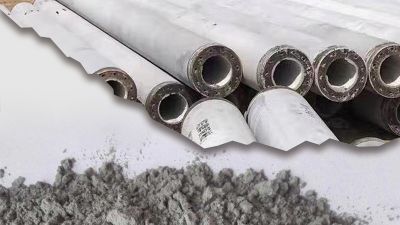
China’s ultrafine mineral admixture market for concrete pipe piles is developing alongside the growing demand for precast structures, urban infrastructure, and durable foundation systems. Industry research from MarketsandMarkets and CCA highlights the importance of high-performance cementitious materials that can improve production efficiency while supporting long-term structural reliability. In this context, specially formulated ultrafine powders made from ground granulated blast-furnace slag (GGBFS) and fly ash provide an effective solution for modern pipe pile manufacturing.
This custom-engineered composite admixture is designed to support rapid early-strength development, allowing precast piles to reach demolding strength efficiently and helping manufacturers maintain stable production schedules. Its fine particle structure promotes dense concrete with improved resistance to soil pressure, water penetration, and demanding service conditions. The formulation also contributes to long-term durability, enabling concrete pipe piles to withstand decades of structural loading when properly designed and produced. Supplied from China with controlled formulation and consistent quality, this ultrafine mineral admixture can be tailored to meet the performance requirements of different precast concrete pipe pile applications.
: Global cement production reached about 4.1 billion tonnes in 2023. That volume reflects strong construction demand worldwide. The figure is an estimate.
Major demand comes from Asia, Africa, the Middle East, Europe, and the Americas. Housing, bridges, ports, and industrial floors require large quantities. Demand is uneven.
Check clinker quality, grinding consistency, export capacity, and compliance documents. Request recent test certificates and batch records. Do not compare prices alone.
Ask for chemical specifications, setting-time results, and recent laboratory certificates. Confirm the product meets the required construction standard. Independent testing remains useful.
Consistent grinding and clinker quality help control strength and setting behavior. Trial batches can reveal problems before large deliveries. Small tests prevent large losses.
Confirm moisture protection before shipment. Inspect loading photographs and packaging condition. A torn bag may harden before installation. That mistake is expensive.
Compare the complete landed cost, including freight, port charges, delays, and possible replacements. A low factory price may hide delivery risks. Cheap is not always cheaper.
Request verified emissions data and details about lower-energy kilns. Blended cement and supplementary materials may reduce environmental impact. Claims can be difficult to compare.
No. Performance may vary between plants and regions. Buyers should inspect the specific facility and storage conditions. A strong global profile is not enough.
Compare samples, confirm after-sales support, and review delivery records. Ask about replacement capacity during delays. Some documentation may remain incomplete.
The global cement market produced approximately 4.1 billion tonnes in 2023, creating strong opportunities for international buyers seeking reliable Concrete Cement suppliers. This guide explains how to evaluate manufacturers by production capacity, product quality, technical consistency, geographic coverage, and export capability. It also highlights the importance of selecting producers that can serve different construction requirements while maintaining stable supply and dependable delivery schedules.
Key purchasing considerations include compliance with major standards such as ASTM C150, EN 197-1, and ISO 9001. Buyers should compare clinker ratios, carbon dioxide intensity, energy efficiency, product certifications, logistics networks, and port access. A manufacturer’s ability to provide consistent quality, transparent documentation, competitive freight solutions, and scalable export volumes can significantly reduce project risks. By reviewing these measurable factors together, global buyers can make more informed decisions and identify cement partners suited to both large infrastructure programs and ongoing commercial construction needs.