Where there's space - there's possibility

Leave Your Message
0%

Picking the right Mixed Cement supplier for a big international project isn’t just about hunting for the lowest price per tonne. You really need to make sure the cement type, strength, how it sets, and its intended use match what your project needs. Sure, a sample bag might look uniform and fine, but reliable performance? That’s better checked through recent test data and proof that the supplier can deliver consistently. Little details actually matter here—something like a delayed certificate or uneven shipments can throw off your concrete work and mess up site schedules. It’s frustrating, but it happens.

In this guide, I’ve put together a list of ten suppliers around the world for you to consider. We’re talking about things like product variety, how much they can produce, their experience with exports, technical support, quality documents, and how easy it is to ship. These points are handy for narrowing down your options, but keep in mind—they aren’t a one-size-fits-all. Every project is unique. A supplier good at handling huge infrastructure jobs might not be the best choice for someone just needing smaller, more flexible orders.

Before you ask for a quote, make sure you know exactly what product grade and application you need. Don’t hesitate to ask suppliers for their technical data sheets, latest test reports (if they have them), packaging options, lead times, and any documents specific to your country or project. It’s really important to verify that what they offer actually meets local standards and your project specs, especially since terminology and standards vary from place to place. Price is definitely important, but keep in mind that the total landed cost involves freight, handling, storage, and the risk of delays—those can add up quickly.

Some supplier info can be tricky to compare directly, and that’s totally normal. Just remember, this overview is a good starting point. Be sure to double-check each claim—talk to the suppliers directly—and get input from qualified project professionals. Better safe than sorry, right?
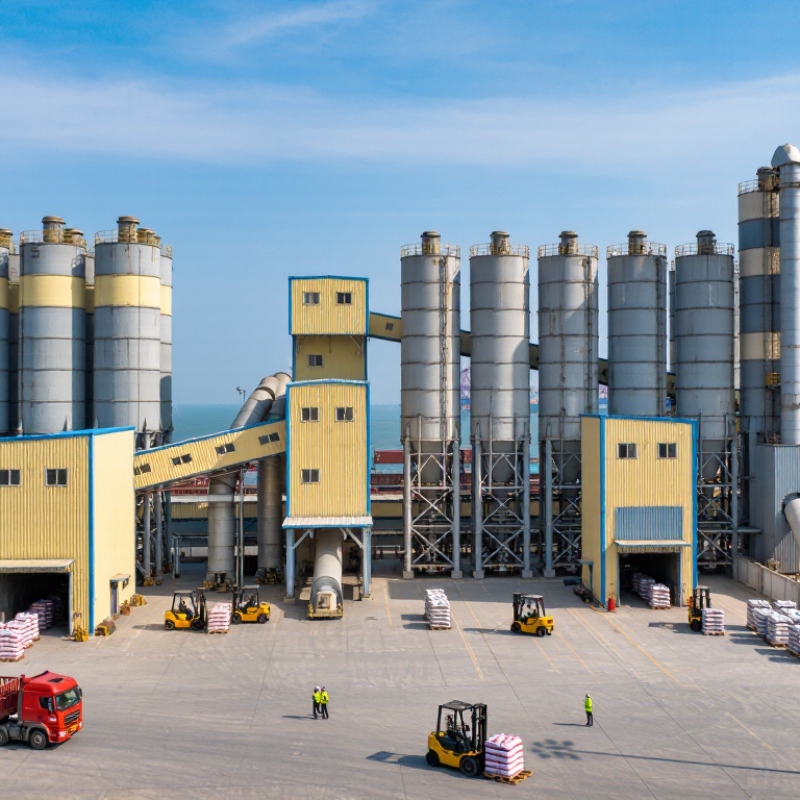
Top 10 Mixed Cement Suppliers for Global Buyers

What Mixed Cement Is and How It Is Produced

Mixed cement is made by combining Portland cement clinker with selected mineral additions, such as ground limestone, granulated blast-furnace slag, fly ash, or calcined clay. The blend can be produced by grinding materials together or by mixing separately ground powders. Gypsum is usually included to help control setting. The exact recipe depends on the intended performance and applicable product requirements.

Production starts with careful proportioning. Materials are crushed or milled, then blended until the powder is consistent. Small changes matter. Moisture, particle size, and mixing time can affect performance, so producers check samples for fineness, setting time, and strength development. Results should be assessed against the relevant specification, not assumed from the ingredient list alone. Buyers can request test data and confirm which materials are included.

Mixed cement is supplied as a dry binder; it still needs aggregates and water to make concrete. It is not the same as Already Mixed Concrete, which is concrete prepared with cement, aggregates, and water. Storage also matters: keep bags dry and sealed, because damp cement may form hard lumps and lose usability. Even a well-controlled blend can behave differently with local sand, water, or curing conditions.

Common Types and Applications of Mixed Cement

Mixed Cement Combines Portland cement with materials such as limestone, ground granulated blast-furnace slag, or pozzolans. Common types include fly-ash blends, slag blends, and Portland-limestone cement. Fly-ash blends are often used in mass concrete because they can reduce heat generation and improve later-age strength. Slag blends suit marine structures and foundations where lower permeability is useful. Portland-limestone cement works in many everyday building applications, including slabs, walls, and sidewalks. Not every blend fits.

A project’s exposure, construction schedule, and local specifications should guide selection. For example, a contractor pouring a thick foundation may value slower heat release, while a sidewalk crew may prioritize predictable finishing and setting. Some blended cements gain strength more slowly in cold weather, so curing plans and early loading need attention. A dependable Cement Co should provide product data, test results, and clear guidance on suitable uses. Still, paperwork does not replace trial batches: local aggregates, water, and temperature can change performance. Check the mix on site.

How Global Buyers Evaluate Cement Suppliers

Global buyers evaluate cement suppliers beyond the quoted price. They check product consistency, test certificates, delivery records, and the supplier’s ability to explain changes between batches. A small variation in setting time can disrupt a concrete pour, especially when trucks are already queued at the site. The Global Cement and Concrete Association’s 2021 roadmap estimates that cement and concrete account for about 7% of global CO2 emissions. That makes verified emissions data and clear reporting increasingly relevant in supplier reviews.

For All Cement procurement, request recent test results for strength, fineness, and setting time, then compare them with the applicable project specification. Ask how the supplier controls raw-material variation and protects cement from moisture during storage and transit. Check actual lead times, port handling arrangements, and contingency plans—not just the delivery promise. A polished spreadsheet can look reassuring. A damp bag tells another story. Carbon claims also deserve scrutiny: ask for the reporting boundary and measurement method before comparing figures.

Tips: Review a sample certificate before placing a large order. Confirm batch traceability and inspect packaging on arrival. Keep a small record of delivery delays and test results; it can reveal patterns that a sales meeting may miss. Be willing to revise your supplier scorecard when field performance contradicts your assumptions.

Top 10 Mixed Cement Suppliers for Global Buyers – How Global Buyers Evaluate Cement Suppliers

An anonymized sourcing comparison framework, not a verified ranking of named companies. The profiles below describe common supplier models; product availability, certifications, capacity, prices, and delivery times must be confirmed directly for each quotation. “Mixed cement” is used here to include blended cement and other cement types containing permitted supplementary materials.

No. Anonymous supplier profile Typical product scope Potential sourcing advantage Key buyer evaluation points Documents and checks to request Best suited to
1 Integrated cement producer Portland cement and blended cement, subject to the producer’s plant approvals and product range. May control several production stages, from clinker production through cement grinding. Confirm plant of origin, available grades, production allocation, export experience, and consistency between shipments. Current product test reports, applicable conformity certificates, plant details, and shipment-specific quality documentation. Buyers seeking regular, large-volume supply from a production source.
2 Independent grinding plant Ground cement products, potentially including blended formulations made with suitable supplementary materials. May offer flexibility in grinding and product formulation, depending on input materials and local requirements. Check clinker and supplementary-material sources, formulation controls, grinding capacity, and batch-to-batch consistency. Mix design or declared composition where applicable, test results, raw-material traceability, and quality-control procedures. Buyers requiring regional production or a defined blended-cement specification.
3 Export-terminal supplier Bulk or bagged cement supplied through a port or dedicated export terminal. May simplify vessel loading and export handling for seaborne orders. Assess terminal access, loading arrangements, port limitations, storage conditions, demurrage terms, and shipment scheduling. Terminal and loading details, draft contract, cargo handling plan, and independent inspection arrangements. Importers purchasing full vessel or other substantial seaborne cargoes.
4 Regional bulk distributor Bulk cement sourced from one or more producers and resold to local or cross-border customers. May provide access to nearby storage, multiple origins, or smaller order quantities. Verify actual source, stock ownership, storage conditions, traceability, and responsibility for product claims. Origin and batch records, current test certificates, warehouse details, and written confirmation of the supplying plant. Buyers needing local inventory or more flexible ordering than a direct plant contract allows.
5 Bagged-cement exporter Bagged products in packaging formats agreed for the destination market; product types vary by source. May suit destinations where bulk silos or specialized unloading equipment are unavailable. Check bag material, net weight, palletization, moisture protection, labeling language, and local packaging rules. Approved artwork and labels, packing list, weight-control records, product test reports, and packaging specifications. Importers serving retail, construction, or smaller project customers.
6 Bulk-cement logistics supplier Bulk cargo coordinated for delivery to receiving terminals, silos, or project sites. May coordinate transport and delivery planning alongside product supply. Separate product responsibility from freight responsibility; confirm equipment compatibility, discharge rates, and delivery windows. Incoterms, transport and discharge plan, insurance details, cargo documents, and procedures for sampling at receipt. Infrastructure and ready-mix buyers with suitable bulk receiving facilities.
7 Blended-cement specialist Blended products using permitted constituents, depending on the governing standard and local approval. May have experience tailoring products to specified performance or local material requirements. Confirm the exact cement designation, permitted constituents, declared composition, and compliance with the destination’s code. Applicable standard and grade, test results, declared constituents where required, and destination-market acceptance evidence. Buyers whose projects or regulations allow a specified blended-cement product.
8 Project-focused supplier One or more cement grades offered against project-specific technical and delivery requirements. May be able to coordinate documentation, delivery stages, and agreed quality checks for a defined project. Review production allocation, delivery schedule, contingency planning, acceptance criteria, and remedies for non-conforming cargo. Project specification cross-check, inspection plan, agreed sampling method, delivery schedule, and claims procedure. Construction projects with fixed technical submittals and phased deliveries.
9 Multi-origin trading supplier Products sourced from different producers or origins, depending on availability and contract terms. May offer sourcing alternatives if a particular origin or shipment window is unavailable. Require approval before any source change; compare each origin’s product compliance, logistics, and traceability separately. Named plant and country of origin for each shipment, source-specific test reports, and written substitution controls. Buyers prioritizing supply options while retaining source-approval controls.
10 Local-market import supplier Imported cement distributed after arrival, with the available product range determined by local inventory. May offer local invoicing, nearby stock, and shorter domestic delivery arrangements. Check stock age and condition, local conformity requirements, storage practices, and whether quoted supply is available inventory or future import. Import and origin documents, local compliance evidence, batch and storage records, and current product test results. Buyers seeking domestic delivery and local-market support.

Standards check: ASTM C150/C150M covers Portland cement, while ASTM C595/C595M covers blended hydraulic cements. EN 197-1 specifies composition, requirements, and conformity criteria for common cements. Confirm the current edition and applicable national adoption with the buyer’s engineer or local authority. ISO 9001 is a quality-management-system standard; it does not by itself certify that a particular cement shipment meets a product specification.

Profiles of Ten Mixed Cement Suppliers

Global cement production was estimated at 4.1 billion metric tons in 2023, according to the U.S. Geological Survey’s Mineral Commodity Summaries 2024. For buyers, supplier profiles matter because blended cement availability, delivery distance, and technical support vary by market. The ten profiles below describe supplier types, not named companies: integrated regional producers, grinding specialists, fly-ash blenders, slag-blend producers, limestone-blend producers, low-carbon product specialists, export-terminal operators, local distributors, project-specification advisers, and custom-blend manufacturers. Each offers different strengths. Some serve large infrastructure sites; others deliver smaller, frequent loads.

Compare each profile against the project’s real constraints. Request product standards, test certificates, typical delivery times, and evidence of batch consistency. Ask how suppliers manage changes in supplementary cementitious material availability. A low price means little if deliveries are irregular. The phrase “Use Cement” often hides a more useful question: which blend suits the exposure, finish, and curing conditions? Get that answer in writing.

The International Energy Agency identifies cement production as responsible for roughly 7% of global CO2 emissions. That makes verified emissions data relevant, but claims should be checked against clear product boundaries and reporting methods. A supplier with published environmental data may still have limited local stock. I would not rank profiles on sustainability claims alone. That is imperfect, but practical: a delayed pour can matter more than a polished brochure.

Quality Standards and Certifications for International Trade

For international buyers, a certificate is useful only when it matches the cement type, production site, and destination market. Blended cement may be assessed under EN 197-1, ASTM C595, or another locally accepted specification. Requirements differ. Ask for current product certificates, independent test reports, and the scope of any quality-management certification, such as ISO 9001. Check that each report identifies the same plant and product code shown on the bags or bulk documents.

Small mismatches matter.

Review results for compressive strength at stated ages, setting time, fineness, and chemical limits under the chosen standard. Before loading, request batch numbers, manufacture dates, certificates of analysis, and a clear process for retaining samples. A retained sample can help compare results if arrival testing raises concerns.

Paperwork is not performance.

Storage conditions still matter: moisture-damaged bags may harden at the corners, even when certificates look complete. A single passing test does not prove consistent quality; request results from several recent batches and clarify retesting procedures. These checks cannot remove every risk, and documentation may still be uneven.

That deserves review.

Shipping, Pricing, and Sourcing Considerations for Buyers

When comparing mixed cement suppliers, buyers should confirm the blend, strength class, and applicable product standard before discussing price. Similar product names can describe different compositions. Request a current technical data sheet and batch test report, then check that the stated setting time and strength suit the intended project. A retained sample or independent laboratory test can help verify consistency. Paperwork is useful, but it is not the material itself.

Shipping details affect quality and total cost. Cement must stay dry, so compare sealed bags with bulk delivery and ask how cargo is protected during loading and transit. Moisture is costly. Request a quote that states the shipping basis, destination port, estimated dispatch window, and packaging weight. Compare freight, insurance, port handling, and inland transport alongside the unit price; otherwise, a low offer may not be low after arrival. Ask about minimum order quantities and whether shipment timing can match storage capacity. Port delays happen.

For sourcing, check production capacity, export experience, and the supplier’s process for handling damaged bags or quality concerns. Ask for recent references where practical, while recognizing that one shipment does not prove every future batch will match. Clarify payment milestones and document requirements in writing before placing an order. No quotation is perfectly comparable until its specifications and delivery terms align. I would leave room for a second test if the first result looks unusually favorable.

A Cost-Smart Guide to Using 30% Ultrafine Powder as a Cement Replacement

Replacing up to 30% of cement with an ultrafine composite powder can be a practical way to manage concrete production costs while supporting lower-carbon construction. The key is choosing a blend designed for high replacement rates, rather than treating supplementary materials as simple one-for-one substitutes. Combining finely ground granulated blast-furnace slag (GGBFS) with fly ash can help balance their individual characteristics and contribute to strength development and durability when the mix is properly designed.

For cost-conscious manufacturers, the benefits depend on consistent material quality and careful production control. Work with reliable suppliers, check the powder’s fineness and composition, and conduct trials using local cement, aggregates, and admixtures. Adjust water demand and curing practices as needed, then verify workability and performance against project requirements. With suitable testing and mix optimization, a high-dosage composite powder can reduce cement use and production expenses without compromising the concrete’s intended mechanical performance or service life. It also offers manufacturers a practical route to improve resource efficiency and advance more sustainable construction.

FAQS

What is mixed cement?

Mixed cement combines Portland cement clinker with mineral additions such as limestone, slag, fly ash, or calcined clay. Gypsum usually helps control setting. Recipes vary.

Is mixed cement the same as concrete?

No. Mixed cement is a dry binder. Concrete also contains aggregates and water, which are combined for a specific project.

Which materials may be used in mixed cement?

Common additions include ground limestone, granulated blast-furnace slag, fly ash, and calcined clay. The ingredient list alone cannot predict performance.

What are common uses for different blends?

Fly-ash blends may suit thick pours where lower heat generation is useful. Slag blends can be useful for foundations or marine structures. Portland-limestone cement is used in slabs, walls, and sidewalks.

How can buyers check cement quality?

Request a current technical data sheet and batch test report. Check fineness, setting time, and strength against the project specification. A second test may be sensible if results look unusually favorable.

What should guide cement selection?

Consider exposure, construction timing, local requirements, and curing conditions. Cold weather may slow early strength development. Test batches matter; paperwork is not the whole story.

How should mixed cement be stored and shipped?

Keep bags sealed and dry. Moisture matters. Damp cement can form hard lumps and become unusable, so ask how shipments are protected in transit.

What costs should buyers compare?

Compare the unit price with freight, insurance, port handling, and inland transport. Confirm packaging weight, order minimums, and delivery timing. A low quote may cost more after arrival.

What should buyers confirm before ordering?

Confirm the blend, strength class, product standard, delivery terms, and payment milestones in writing. Ask how damaged bags or quality concerns are handled. One shipment does not guarantee the next.

Conclusion

This article introduces Mixed Cement, explaining how it is produced by combining Portland cement with supplementary materials and how the blend can influence performance, durability, and environmental impact. It reviews common types of mixed cement and their uses in construction, from general building projects to applications that require particular strength or resistance characteristics. Buyers will also find practical criteria for assessing suppliers, including product consistency, production capacity, technical support, and the ability to meet project specifications.

The article outlines profiles of ten suppliers without focusing on brand promotion, and explains the role of recognized quality standards and certifications in international trade. It also covers key sourcing considerations, such as confirming product requirements, comparing quotations, understanding packaging and shipping options, and accounting for delivery timelines and total costs. Together, these topics offer global buyers a clear framework for making informed, quality-conscious cement procurement decisions.

Liam

Liam

Liam is a dedicated marketing professional at Jiangsu Anmin New Building Materials Co., Ltd., a key player in the construction materials industry since its inception in 2010. With extensive expertise in the field, Liam specializes in the promotion of general-purpose silicate cement and masonry......
Previous China Top Slag Powder Suppliers How to Choose Quality?