Where there's space - there's possibility

Leave Your Message
Where there's space - there's possibility
China has turned into a big sourcing hub for Prefab Concrete components—everything from wall panels and staircases to full structural modules. But if you're trying to pick a supplier you can actually rely on, it takes more than just comparing factory prices. You've also got to look at production capacity, engineering support, quality systems, mold accuracy, curing methods, and how well they handle delivery. So, in this guide, we take a look at some of the top Chinese companies — and yeah, we break down how what they can do might line up with all sorts of construction projects.
A few names that could come up are China National Building Material Group Corporation, China State Construction Engineering Corporation, and Shanghai Baoye Group Corporation. Each one works in its own kind of business setup and project setting, you know? So their experience might cover big infrastructure, commercial buildings, industrial facilities, or even residential development. But here's the thing: just being a large company doesn't automatically mean they're the right fit. Honestly, things like project references, technical drawings, sample approvals, and factory inspections? Those tend to give you stronger evidence. And yeah—details really do matter.
If you want a solid evaluation, you’d want to look at things like concrete strength records, how the reinforcement is placed, dimensional tolerances, lifting points, surface finishes, and packaging methods. It’s also worth checking how well they communicate, whether they have export experience, what their inspection procedures look like, and what kind of after-sales support they offer. Independent testing—plus specs that are clearly written down—can go a long way in cutting down misunderstandings between design teams and manufacturers. That said, no supplier is perfect. Things can slow down during peak production seasons, and honestly, those catalog photos? They don’t always show the real-world limitations. So if you’re buying, it’s smart to push back on overly optimistic promises and ask for numbers you can actually verify. The best choice? Well, it really comes down to your project’s complexity, where it needs to go, how tightly you want to control the budget, and how much risk you’re comfortable with. Think of this as a practical starting point for comparing China’s top Prefab Concrete suppliers with a bit more confidence.
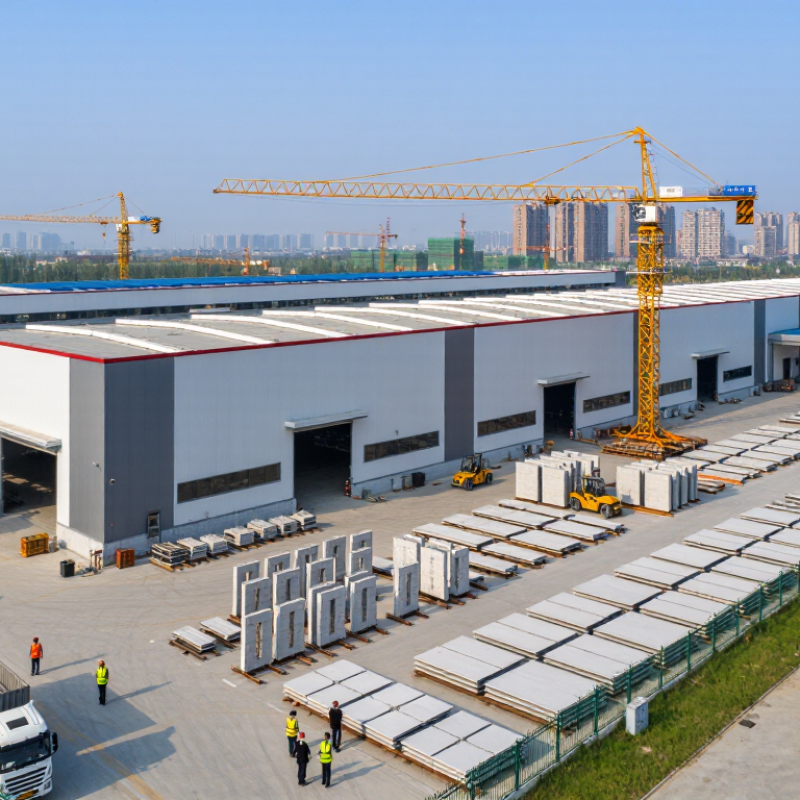
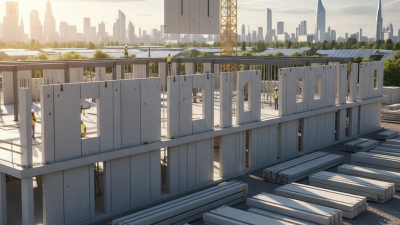
Prefab concrete products are factory-made building components, cured before delivery. They include wall panels, beams, columns, stairs, pipes, culverts, and paving units. Workers cast concrete inside controlled molds, then inspect dimensions, strength, and surface quality. This process reduces weather-related delays and improves repeatability on busy construction sites.
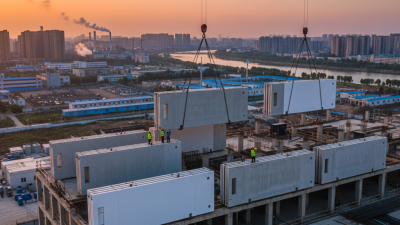
The benefits are practical, not magical. McKinsey’s 2019 construction report estimates modular methods can reduce project schedules by 20–50%. It also reports potential cost reductions of up to 20%. Prefab concrete can limit on-site formwork, labor, and material waste. However, transport distance, lifting equipment, and poor joint design can erase those gains. UNEP’s 2022 Global Status Report links buildings and construction to 37% of global energy and process-related emissions. Therefore, suppliers should provide mix details, curing records, test results, and traceable production dates. I would also check actual factory samples, not only polished catalog images.
Tips: Ask for independent compressive-strength reports and dimensional tolerances. Confirm delivery routes before ordering large panels. Review connection drawings with a qualified engineer. The World Bank projects construction waste could reach 2.59 billion tonnes annually by 2030, so accurate ordering matters. A reliable Chinese supplier should explain rejected-product handling, replacement procedures, and quality controls clearly. Perfect claims deserve careful questions.
| Prefab Concrete Product | Typical Product Forms | Common Strength Range | Typical Applications | Main Reasons for Use | Important Quality Requirements | Typical Delivery and Installation Considerations |
|---|---|---|---|---|---|---|
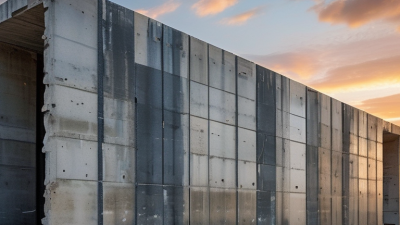
| Precast Concrete Wall Panels | Solid panels, sandwich panels, insulated façade panels and partition panels | Approximately 30–50 MPa, depending on structural and architectural requirements | Exterior façades, industrial buildings, warehouses, residential buildings and interior partitions | Fast enclosure, consistent appearance, reduced on-site formwork and improved construction productivity | Dimensional accuracy, surface finish, connection details, reinforcement placement and insulation performance where applicable | Requires suitable lifting equipment, protected edges, accurate foundations and properly designed panel connections |
| Precast Concrete Beams | Rectangular beams, inverted-T beams, prestressed beams and bridge beams | Approximately 40–60 MPa; higher grades may be specified for prestressed applications | Commercial buildings, parking structures, industrial facilities, bridges and infrastructure projects | High load capacity, controlled factory production, reduced temporary supports and shorter structural schedules | Load capacity, camber control, reinforcement or prestressing quality, bearing dimensions and lifting-point design | Transport planning is important because beam length and weight can affect route selection and crane capacity |
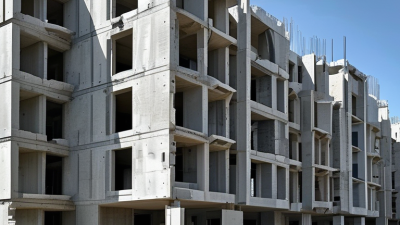
| Precast Concrete Columns | Square, rectangular, circular and multi-storey column sections | Approximately 40–60 MPa for many structural projects | Factories, logistics centers, offices, parking garages and multi-storey structures | Rapid structural assembly, reliable factory quality and reduced site labor | Verticality, end tolerances, reinforcement continuity, fire resistance and connection performance | Column shoes, dowels, grouted sleeves or other connection systems must be coordinated before production |
| Prestressed Concrete Floor Slabs | Hollow-core slabs, solid slabs, ribbed slabs and double-tee units | Approximately 40–60 MPa, depending on span and prestressing design | Residential buildings, offices, hospitals, schools, parking structures and commercial facilities | Long spans, reduced structural depth, fast installation and lower requirements for temporary formwork | Deflection, camber, fire rating, bearing length, openings and diaphragm connections | Units are usually installed by crane; lifting points, temporary bracing and joint grouting require careful coordination |
| Precast Concrete Stairs | Single-flight stairs, half-turn stairs, landings and complete stair cores | Approximately 30–50 MPa | Apartment buildings, offices, schools, hospitals and public buildings | Ready-to-use stair access, accurate dimensions, reduced formwork and improved site safety | Tread and riser consistency, slip resistance, reinforcement, edge protection and dimensional compatibility | Stair openings and bearing points should be verified before delivery; lifting access is essential |
| Precast Concrete Pipes | Reinforced circular pipes, jacking pipes, box sections and culvert units | Commonly produced with concrete grades around 30–50 MPa | Stormwater drainage, sewage systems, road crossings, irrigation and utility infrastructure | Reliable hydraulic performance, standardized production, durable underground service and efficient installation | Watertight joints, load class, dimensional tolerances, abrasion resistance and resistance to ground conditions | Trench preparation, bedding, joint sealing and lifting procedures directly affect service performance |
| Precast Concrete Box Culverts | Single-cell and multi-cell rectangular culvert units | Approximately 30–50 MPa, subject to traffic and soil loading | Road drainage, pedestrian underpasses, utility channels and small water crossings | Fast installation, predictable structural performance and reduced disruption to roads and waterways | Structural design, joint treatment, water tightness, dimensional accuracy and resistance to earth pressure | Foundation leveling and lifting capacity must be checked because units can be large and heavy |
| Precast Concrete Manholes and Utility Chambers | Manhole rings, bases, covers, inspection chambers and cable chambers | Approximately 30–50 MPa | Water supply, wastewater, telecommunications, electrical and municipal utility networks | Standardized dimensions, quick assembly, durable underground performance and reduced on-site casting | Watertight joints, cover load rating, corrosion resistance, benching details and dimensional fit | Correct excavation depth, base preparation and sealing between sections are essential for reliable installation |
| Precast Concrete Retaining Wall Units | L-shaped walls, T-shaped walls, modular blocks and gravity wall units | Approximately 30–50 MPa | Landscape construction, road projects, industrial yards, residential developments and earth retention | Quick installation, repeatable geometry, reduced formwork and flexible modular construction | Sliding and overturning resistance, drainage, reinforcement, foundation bearing and surface durability | Proper drainage and level foundations are critical; larger units require suitable lifting and transport plans |
| Precast Concrete Paving and Landscape Products | Pavers, kerbs, slabs, barriers, benches and architectural elements | Approximately 30–50 MPa, depending on product type and exposure | Roads, sidewalks, plazas, parking areas, parks and commercial landscaping | Consistent appearance, replaceability, efficient production and a wide range of textures and finishes | Surface wear, freeze-thaw resistance where relevant, dimensional consistency, slip resistance and color uniformity | Subgrade preparation, drainage, joint treatment and careful handling help prevent cracking and uneven settlement |
| Precast Concrete Barriers and Safety Products | Traffic barriers, median barriers, wheel stops and protective blocks | Approximately 30–50 MPa | Highways, construction zones, parking areas, ports, warehouses and industrial sites | Rapid deployment, impact resistance, relocation capability and reduced maintenance | Impact performance, anchoring, dimensions, lifting points and compliance with applicable road-safety standards | Transport and placement should consider traffic management, site access and safe lifting procedures |
The strength values and dimensions shown are general industry ranges rather than fixed specifications. Actual requirements should be confirmed through structural design, applicable national standards, exposure conditions, transportation limits and project-specific testing.
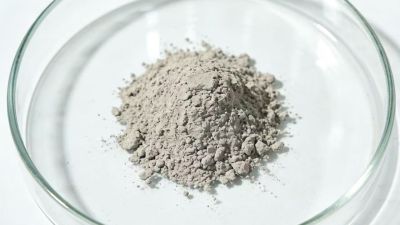
Ultrafine powder is becoming an increasingly valuable auxiliary material in cement and concrete production, reflecting the construction industry’s demand for stronger, more durable, and lower-carbon solutions. Recent market research highlights the growing use of mineral-based supplementary materials to improve performance while reducing reliance on cement clinker. Our ultrafine powder is produced from selected mineral powder and fly ash, processed with advanced grinding technology to achieve a uniform particle size, high reactivity, and excellent compatibility with cementitious systems. Manufactured in China under strict quality controls, it is suitable for cement plants, ready-mix concrete, pipe piles, and cement-based fireproof or thermal insulation materials.
In cement manufacturing, the composite formulation can enhance strength, durability, and impermeability while helping reduce clinker consumption and overall production costs. In concrete, its fine particles fill internal voids, improving workability, compactness, frost resistance, and resistance to shrinkage-related cracking. These benefits support longer service life in bridges, highways, tunnels, high-rise buildings, and other demanding infrastructure projects. With stable raw material control and consistent production standards, this ultrafine powder offers construction-material producers a practical way to optimize product quality, improve resource efficiency, and meet the evolving performance requirements of modern cement and concrete applications.
Request mix-design records, cube-test results, curing logs, and current production-capacity data. Ask for independent reports on strength, dimensions, water absorption, and fire performance. Certification helps, but recent project references matter more. Paperwork alone is not enough.
Request three quotations with identical concrete grades, dimensions, reinforcement, finishes, packaging, and delivery terms. Compare total costs, not headline unit prices. Check whether moulds, lifting accessories, inspections, and replacement responsibility are included. Cheap can become expensive.
Major production corridors include the Yangtze River Delta, Pearl River Delta, and Bohai Rim. Western markets are increasingly served by factories in Sichuan and Chongqing. Regional access affects transport time and cost. The map is not perfect.
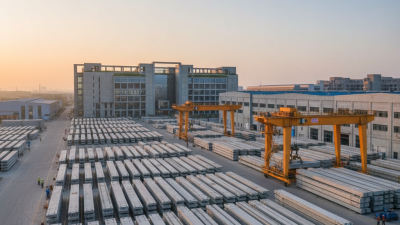
Large precast factories produce beams, columns, slabs, stairs, and wall panels. Infrastructure specialists make bridge, tunnel, drainage, rail, and utility components. Modular suppliers combine concrete with building services. Trading companies may connect buyers with factories, but technical control can be weaker.
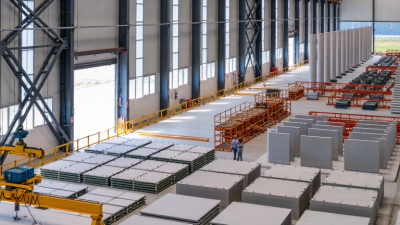
Inspect mould maintenance, curing rooms, worker training, storage yards, and lifting points. Look for cracks, stains, exposed reinforcement, warped edges, and inconsistent surfaces. Check whether concrete components sit on clean, stable supports. Muddy storage is a warning.
Confirm mould availability, lifting points, packaging, routes, delivery dates, and damage responsibility. Ask for a realistic production schedule with inspection milestones. Review loading photographs before shipment. Small route changes can create serious delays.
Ask about recycled aggregates, cement-replacement materials, curing efficiency, and verified environmental data. Request measurable information rather than broad environmental claims. Lower cement use may affect strength or curing time. Verify the trade-off carefully.
Approve drawings and physical samples before mass production. Use traceability codes, staged inspections, dimensional checks, and regular production photographs. Review reinforcement placement before casting. My assessment may still miss site-specific risks, so keep independent oversight.
Prefab Concrete products are factory-made components such as wall panels, beams, columns, slabs, staircases, and utility structures. They are widely used because controlled production can improve consistency, shorten construction schedules, reduce site labor, and support efficient large-scale projects. This article explains how buyers can evaluate suppliers in China by reviewing production equipment, engineering expertise, quality management, material traceability, testing procedures, delivery performance, and customization capabilities.
It also examines the main regional centers of China’s prefab concrete industry and distinguishes among specialized manufacturers, large integrated construction-material companies, project-based factories, and export-oriented suppliers. Comparisons should focus on product quality, manufacturing capacity, technical support, compliance documentation, logistics, and after-sales service rather than price alone. Before selecting a supplier, buyers should confirm drawings and specifications, production standards, inspection records, factory capacity, packaging methods, lead times, payment terms, and communication processes. A careful assessment helps ensure that the chosen supplier can deliver reliable Prefab Concrete products that meet project requirements and local regulations.


 Send
Email
 Phone