Where there's space - there's possibility

Choosing Water Concrete can shape the safety, service life, and maintenance needs of a construction project. The material is often considered for tanks, drainage channels, marine structures, basements, and water treatment facilities. Its value depends on more than strength alone. Permeability, crack control, curing quality, and exposure conditions all require careful review.
A reliable selection process begins with project evidence. Engineers should examine soil moisture, water pressure, temperature changes, chemical exposure, and expected loading. Laboratory tests can measure absorption, permeability, compressive strength, and resistance to aggressive environments. On site, proper placement and curing remain essential. Even a well-designed mix may perform poorly when workers add uncontrolled water or remove protection too early.
Water Concrete is not a universal solution. That deserves honest attention. A contractor may expect complete waterproofing, yet joints, penetrations, or poor drainage can still create leaks. Early assumptions can also be wrong. The final specification should therefore combine mix design, joint detailing, drainage planning, inspection records, and local building requirements. Experienced suppliers and qualified engineers can support this process with verified test data and practical guidance. Project teams should request product documentation, confirm batch consistency, and record curing conditions. These details may seem small. They often determine long-term performance. By weighing technical evidence against actual site constraints, owners can decide whether Water Concrete offers durable value for their construction goals.
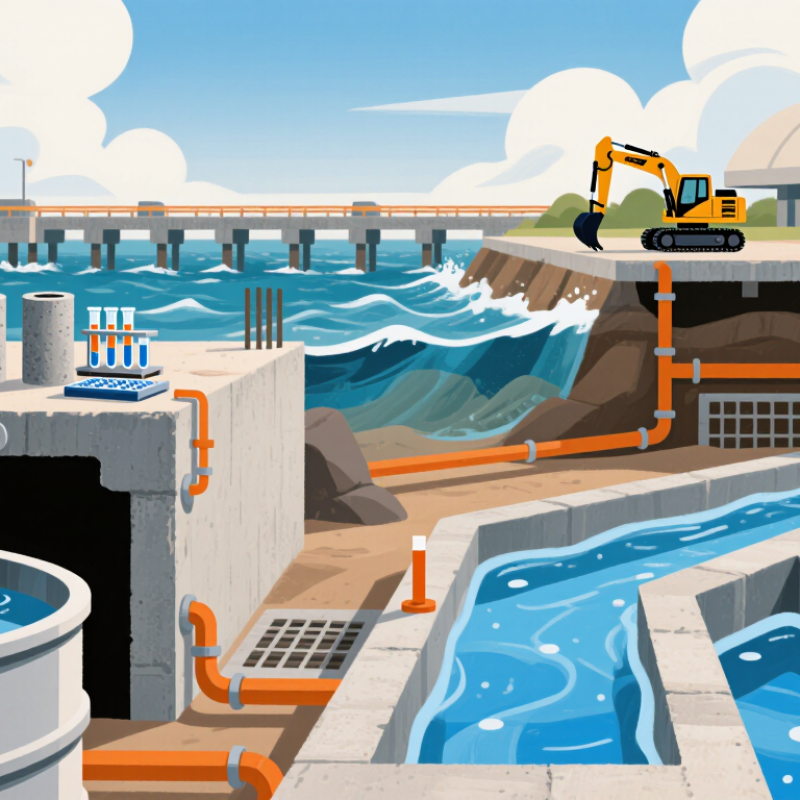
Water concrete usually refers to pervious concrete, a mix designed to let water pass through its hardened surface. It uses little or no fine aggregate, creating connected voids between coarse stones. Rainwater moves through these channels instead of collecting on the slab. The American Concrete Institute’s ACI 522R-20 reports typical infiltration rates of approximately 81–730 liters per minute per square meter. That range depends heavily on placement, curing, and pore structure.
Its performance begins with mix design. Cement paste coats the aggregate, while controlled water activates hydration and bonds the particles. Too much water can close the voids and reduce drainage. Too little water may leave weak, dusty surfaces. The National Ready Mixed Concrete Association identifies water-cement ratio as a major factor in concrete strength and durability. Field crews should check moisture, compaction, and curing conditions rather than trust the batch ticket alone.
St Concrete applications may include parking areas, walkways, and low-speed access roads. A properly prepared stone base temporarily stores stormwater beneath the surface. The U.S. Environmental Protection Agency recognizes permeable pavement as a stormwater management practice that can reduce surface runoff. It is not maintenance-free. Sediment can block the pores, especially near unprotected construction entrances. I have seen drainage plans fail because soil conditions were assumed, not tested. A simple infiltration test can expose that mistake before concrete placement begins.
Water concrete is selected for projects where moisture exposure is a daily concern. Its key property is controlled permeability. A lower water-cement ratio usually creates a denser structure, reducing pathways for water and chloride intrusion. However, less water can reduce workability. Careful mix design and suitable admixtures help maintain placement quality without weakening the hardened concrete.
Strength matters, but it is not the only measure. Water concrete should resist abrasion, freeze-thaw cycles, and repeated wetting and drying. Proper curing is essential. Keep fresh concrete moist and protected during early hydration. A dry, windy surface may develop fine cracks before the material reaches its design strength. Small cracks can become larger entry points.
A practical site check includes slump, temperature, air content, and test cylinders. Inspect joints closely. They often control leakage more than the concrete body. A Concrete Pa specification should identify exposure conditions, target strength, permeability limits, curing time, and joint treatment. Local standards and an experienced engineer should guide final decisions.
It is not magic.
Field conditions can still expose weaknesses. Poor vibration may leave honeycombing around reinforcement. Excess water added during placement can also change performance. Regular inspection, documented testing, and honest review of failed areas make the material more reliable for basements, tanks, foundations, and other water-exposed structures.
Why Choose Water Concrete for Your Construction Projects?
Water Concrete, often understood as pervious concrete, can turn a hard surface into a working drainage layer. Its connected pores allow rainwater to pass through instead of rushing across asphalt or sealed slabs. The National Ready Mixed Concrete Association reports typical infiltration rates of 2 to 18 gallons per square foot per minute. That performance can reduce puddles, surface runoff, and pressure on stormwater pipes. On a small site, water may disappear through the pavement while leaves remain visible on top.
The environmental value extends beyond drainage. Less runoff can carry fewer oils, metals, and sediment into nearby waterways. The U.S. Environmental Protection Agency recognizes permeable pavement as green infrastructure for managing stormwater. A Co Concrete design can also reduce the need for separate drainage channels when soil conditions are suitable. However, performance depends on proper grading, subbase preparation, and routine vacuum cleaning. It is not a universal solution.
Cement production still creates a significant climate burden. The Global Cement and Concrete Association estimates that concrete contributes about 7% of global carbon dioxide emissions. Therefore, specifying permeable concrete does not make a project automatically sustainable. Lower-carbon binders, recycled aggregates, local sourcing, and longer service life should be assessed together. Field experience also suggests a practical caution: clogged pores can quietly reduce infiltration, so maintenance records matter as much as the initial mix design.
Environmental benefits of permeable concrete for stormwater management
Permeable concrete allows rainfall to pass through the pavement structure and infiltrate into the ground, reducing surface runoff and pressure on drainage systems. The chart uses representative runoff coefficient values: approximately 0.85–0.95 for conventional concrete and 0.05–0.35 for permeable pavement. Actual performance depends on soil conditions, design, maintenance, rainfall intensity, and installation quality.
Sources: U.S. Environmental Protection Agency, Green Infrastructure Technical Assistance; Federal Highway Administration, permeable pavement guidance.
Water concrete, understood as concrete engineered for water-contact environments, supports reservoirs, drainage channels, wastewater facilities, seawalls, and permeable pavements. These projects face constant moisture, pressure changes, and chemical exposure. Proper mix design can reduce seepage and improve service life.
The American Concrete Institute recommends controlling water-cement ratio, curing, joints, and crack width for durable liquid-containing structures. Small details matter. A poorly sealed joint can defeat an otherwise strong slab.
Modern construction also uses permeable concrete for parking areas, walkways, and urban drainage. The United Nations Environment Programme reported that buildings and construction consumed 34% of global energy and produced 37% of energy-related emissions in 2021.
Better water management can support lower-impact site planning, although concrete itself still carries embodied carbon. The U.S. Environmental Protection Agency notes that green infrastructure can reduce stormwater runoff through infiltration and temporary storage. Results depend on soil, rainfall, maintenance, and design quality.
Tips: Specify exposure conditions before selecting the mix. Test permeability and compressive strength. Detail construction joints carefully. Protect fresh concrete from rapid drying. Inspect cracks after seasonal temperature changes. Do not assume a waterproof coating repairs poor workmanship. On one project, a contractor may prioritize strength but overlook drainage gradients. That choice deserves review. Permeable surfaces can clog without routine cleaning, and water concrete is not a universal fix.
When comparing water concrete with traditional concrete, the main difference is how each handles rainfall. Here, water concrete refers to a permeable mix that lets water pass through connected voids. Traditional concrete creates a dense surface, so rain usually flows toward drains or low areas.
On a small parking area, water concrete may reduce puddles after a heavy storm. The surface can feel slightly rough underfoot. That texture is intentional.
Lw Concrete can support practical drainage goals when the soil, base layer, and installation are properly designed.
However, it is not automatically stronger or cheaper than traditional concrete. Its open structure may reduce compressive strength, and blocked pores can limit drainage. Traditional concrete remains useful for heavily loaded floors, foundations, and areas needing a smooth finish.
Site engineers should review traffic loads, soil permeability, freeze-thaw exposure, and local specifications before selecting either system. Field experience shows that poor sub-base preparation causes failures more often than the concrete itself.
Tips: Test the soil first. Keep sediment away from the surface during construction. Follow the specified curing period, even when the slab looks dry. Inspect drainage performance after the first major rainfall. A careful inspection may reveal design assumptions that seemed reasonable but were incomplete.
Why Choose Water Concrete for Your Construction Projects?
Water concrete can suit foundations, retaining walls, tanks, channels, and other wet environments. Its value depends on durability, permeability, strength, and proper site preparation. Before selecting it, identify the water pressure, exposure level, drainage conditions, and expected service life. A concrete mix that performs well beside a garden pond may fail under constant underground pressure.
Check the water-cement ratio, aggregate quality, curing plan, and joint design with a qualified engineer. Low permeability matters, but it cannot compensate for poor vibration or badly sealed construction joints. Local building codes and project specifications should guide testing requirements. On site, I have seen small cracks become serious leakage paths after rushed curing. That risk is easy to underestimate. It is also worth reviewing repair access, because hidden surfaces are difficult and expensive to inspect later.
Tips: Request laboratory test results for permeability and compressive strength. Confirm that the mix matches the actual water exposure. Protect fresh concrete from rapid drying, freezing, and heavy rain. Inspect formwork before pouring. Do not rely on additives alone. A practical trial pour can reveal workability problems before the main placement. Even experienced teams should question assumptions when groundwater, temperature, or soil conditions change.
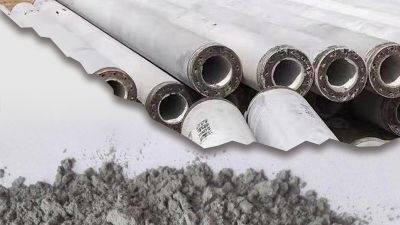
Ultrafine mineral admixtures are increasingly important in concrete pipe pile production, where high early strength, low permeability, and long-term load resistance must be achieved within tightly controlled factory cycles. A composite powder based on ground granulated blast-furnace slag (GGBFS) and fly ash can refine the cementitious matrix, improve particle packing, and reduce capillary voids. This is especially valuable for precast piles exposed to groundwater, aggressive soils, and repeated handling during demolding and installation.
Industry data supports this direction. The International Energy Agency reports that cement production contributes approximately 7% of global energy-related CO₂ emissions, making supplementary cementitious materials a practical route to lower-carbon concrete. ASTM C618 recognizes fly ash as a pozzolanic material, while ACI 233R-17 identifies GGBFS as an effective component for improving permeability resistance and durability. When properly proportioned and cured, these materials can also support dense concrete with reduced chloride and sulfate ingress, critical factors for pile foundations subjected to substantial soil and water pressure.
For Chinese precast manufacturers, a specialized ultrafine composite admixture can provide faster early-strength development for efficient demolding without sacrificing later-age performance. Its fine particle structure promotes a more uniform matrix, helping pipe piles maintain dimensional stability and structural capacity over decades of service. Consistent factory quality, controlled fineness, and compatibility with steam or accelerated curing systems are essential for reliable production across large-scale infrastructure projects.
Water concrete usually means pervious concrete. It allows rainwater to pass through connected gaps between coarse stones. Its surface remains intentionally rough.
Cement paste coats the stones without filling every space. These connected voids form channels. Rain moves downward instead of pooling on the slab.
Typical infiltration rates range from about 81 to 730 liters per minute per square meter. Actual results vary widely. Placement, curing, and pore structure matter.
Excess water can close the internal voids. Drainage may decrease. The surface may also lose its intended open structure.
The concrete may become weak and dusty. A dry-looking slab is not necessarily a properly cured slab. That assumption can be misleading.
Common uses include parking areas, walkways, and low-speed access roads. It may help reduce puddles after heavy rain. It is not suitable for every load.
Not automatically. Its open structure can reduce compressive strength. Traditional concrete may suit foundations, heavily loaded floors, and smooth-finish areas better.
Test the soil’s permeability first. Review traffic loads, freeze-thaw exposure, and local requirements. Prepare a clean stone base beneath the slab.
Sediment can block the pores, especially near construction entrances. Keep soil away from the surface. Inspect the area after the first major rainfall.
Do not trust the batch ticket alone. Check moisture, compaction, and curing conditions on site. A drainage plan can look complete and still miss poor soil.
Water Concrete is a construction material designed to work efficiently in environments where water management, permeability, or moisture resistance is important. Its performance depends on a carefully balanced mixture of cementitious materials, aggregates, water, and selected additives. During placement and curing, the mixture develops strength while its internal structure can either limit water penetration or allow controlled drainage, depending on the project’s purpose. Key properties may include durability, compressive strength, workability, reduced cracking, and resistance to moisture-related damage.
Choosing Water Concrete can support more sustainable construction by improving stormwater control, reducing surface runoff, extending service life, and potentially lowering maintenance needs. It can be used for foundations, pavements, drainage areas, retaining structures, and other modern infrastructure projects. Compared with traditional concrete, it may offer better water performance but can require stricter mixing, placement, curing, and quality control. Before using it, project teams should evaluate climate, soil conditions, load requirements, drainage goals, material availability, installation expertise, costs, and applicable construction standards.